
Introduction
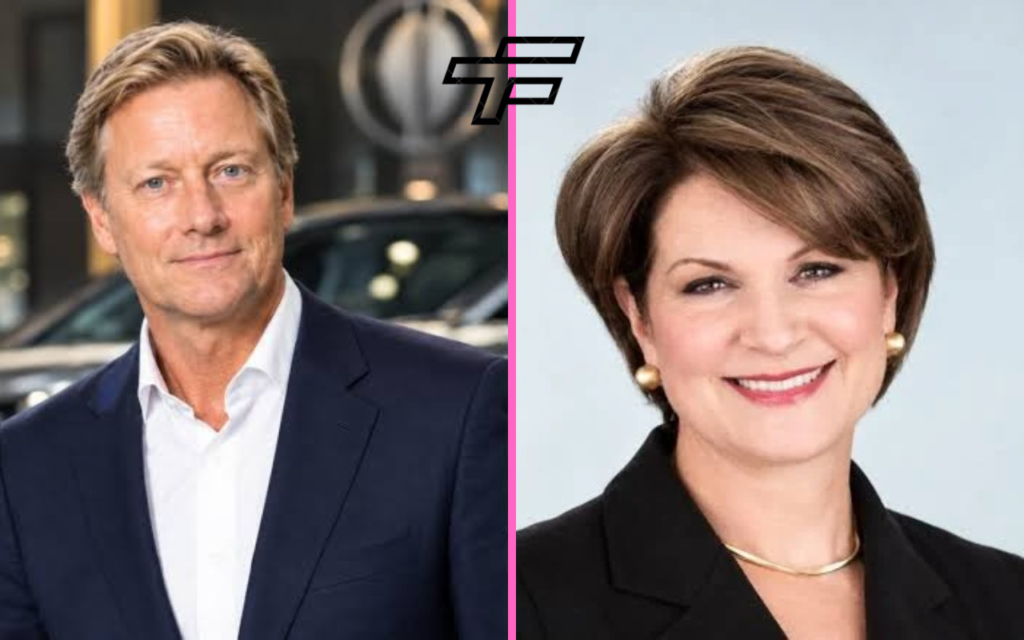
David Zaslav and Conor McGregor are two well-known figures whose careers have influenced different areas of modern entertainment. Zaslav is a prominent media executive associated with television networks, film studios, streaming services, and sports broadcasting. McGregor, meanwhile, rose to international fame through mixed martial arts and later expanded his public profile through business ventures and commercial partnerships. Although they work in different fields, their careers offer an interesting look at how media, sports, celebrity, and business intersect.
David Zaslav built his reputation by leading major media organizations and overseeing changes in how entertainment reaches audiences. Conor McGregor became famous for his fighting ability, confident personality, and capacity to attract worldwide attention. Both demonstrate how influence can extend beyond an individual’s primary profession, although their paths to recognition have been very different.
It is important to distinguish their individual achievements from any supposed partnership between them. Their careers intersect at the broader relationship between sports and media, but a direct business partnership or personal connection should not be assumed without reliable evidence. Understanding their backgrounds provides a clearer picture of why their names may appear together in discussions about entertainment, business, and public influence.
David Zaslav’s Background and Early Career
David Zaslav is an American media executive best known for his leadership in the television and entertainment industries. Before becoming one of the most recognizable executives in Hollywood, he developed experience in law, business, and cable television. His professional journey reflects the importance of understanding both the commercial and creative sides of the media business.
Zaslav studied at Binghamton University before earning a law degree from Boston University School of Law. His legal education helped prepare him for a career involving contracts, negotiations, corporate relationships, and business strategy. These skills later became valuable as the media industry experienced consolidation, technological change, and increasing competition for viewers.
He joined NBCUniversal in 1989 and worked in positions connected to cable programming and distribution. During this period, cable television was expanding, and media companies were developing specialized channels to reach audiences with different interests. Sports, entertainment, documentaries, and news all became important parts of the evolving television landscape.
Zaslav’s experience at NBCUniversal helped him understand how television networks could build audiences and generate revenue. His career eventually led him to Discovery Communications, where he took on a leadership role that would define much of his public reputation. His subsequent work placed him at the center of major changes in the global entertainment industry.
David Zaslav’s Leadership at Discovery and Warner Bros. Discovery
In 2007, Zaslav became president and chief executive officer of Discovery Communications. During his leadership, the company expanded its international presence and developed a broad portfolio of television brands. Discovery’s programming included documentaries, factual entertainment, home improvement, food, wildlife, and lifestyle content. Networks such as Discovery Channel, Animal Planet, HGTV, Food Network, and TLC helped the company reach audiences with different interests.
One of Zaslav’s major priorities was building a collection of recognizable media brands that could attract viewers across different markets. Rather than depending on a single type of entertainment, Discovery developed programming for a wide range of audiences. This approach gave the company multiple sources of advertising and distribution revenue while strengthening its international business.
A defining moment came in April 2022, when Discovery completed its merger with WarnerMedia, creating Warner Bros. Discovery. Zaslav led the transaction, which brought together Discovery’s factual entertainment brands with Warner Bros.’ film and television operations, HBO, CNN, and other major properties. The combination created a large entertainment company with interests spanning scripted programming, unscripted television, films, news, and sports.
The merger also introduced substantial challenges. Combining large organizations requires decisions about staffing, budgets, programming priorities, and technology. Warner Bros. Discovery also faced pressure to manage debt, compete in the streaming market, and make its entertainment businesses more financially sustainable. These issues illustrate the complicated nature of corporate leadership in an industry where consumer preferences and distribution methods continue to change.
Conor McGregor’s Early Life and Journey Into Mixed Martial Arts
Conor Anthony McGregor was born on July 14, 1988, in Dublin, Ireland. He grew up in Crumlin, a neighborhood in the Irish capital, and developed an interest in combat sports during his youth. Before becoming an international celebrity, McGregor lived a much more ordinary life and worked as a plumbing apprentice while pursuing his ambition of becoming a professional fighter.
Boxing was an important part of his early development. He trained at Crumlin Boxing Club and later moved into mixed martial arts, a sport that combines techniques from disciplines such as boxing, wrestling, Brazilian jiu-jitsu, and kickboxing. Under the guidance of coach John Kavanagh, McGregor developed the striking skills and fighting style that would become central to his professional identity.
McGregor made his professional mixed martial arts debut in 2008. He competed in smaller promotions before joining the Ultimate Fighting Championship in 2013. His early UFC appearances attracted attention because of his confident interviews, precise striking, and ability to finish fights. He was not simply presenting himself as a competitor; he was also building a recognizable public personality.
His rise demonstrated how an athlete could use sporting performance and communication skills together. McGregor frequently spoke about his ambitions before major fights, creating anticipation among fans and the media. His confidence attracted supporters while also making him a controversial figure in some discussions. Whatever their opinions of his personality, audiences increasingly recognized his name.
McGregor’s Championship Achievements and Global Fame
McGregor reached a major milestone in December 2015 when he defeated José Aldo to win the undisputed UFC featherweight championship. The fight ended in just 13 seconds, making it one of the most memorable finishes in UFC championship history. The result strengthened his reputation as a dangerous striker and helped establish him as one of the sport’s biggest attractions.
In November 2016, McGregor defeated Eddie Alvarez to win the UFC lightweight championship. By holding the featherweight and lightweight titles simultaneously, he became the first fighter in UFC history to hold championships in two weight divisions at the same time. This achievement remains one of the defining moments of his career.
His success also extended beyond the UFC. In August 2017, McGregor faced undefeated boxing champion Floyd Mayweather Jr. in a professional boxing match. Mayweather won by technical knockout in the tenth round, but the event attracted enormous international attention and became a landmark example of the commercial potential of crossover sporting events.
McGregor’s later fighting career included victories, defeats, injuries, and periods away from competition. His trilogy of fights with Dustin Poirier attracted significant attention, although the third contest in July 2021 ended when McGregor suffered a serious leg injury. His career illustrates that fame and commercial appeal can continue to influence an athlete’s public profile even when sporting activity becomes less consistent.
Business Ventures and Financial Influence
David Zaslav and Conor McGregor both operate in environments where commercial decisions can have a major impact, but their approaches to business are different. Zaslav’s professional responsibilities have centered on managing large corporate organizations, overseeing strategic transactions, and coordinating the operations of media brands. His work involves decisions affecting employees, creative teams, investors, advertisers, and audiences across many countries.
McGregor has pursued business opportunities built around his personal brand. One of his most prominent ventures was Proper No. Twelve Irish whiskey, launched in 2018. The brand connected his Irish identity and public image with a consumer product aimed at an international market. He has also been associated with hospitality, fitness, recovery products, and other commercial projects.
His involvement with The Black Forge Inn, a pub in Dublin, demonstrates how a celebrity can extend a personal brand into a physical business. Unlike sponsorships that rely primarily on advertising, hospitality businesses require ongoing attention to operations, customer experience, staffing, and reputation.
McGregor’s commercial profile has benefited from his visibility in sports and entertainment. However, public attention should not automatically be treated as proof of business profitability. The financial results of private ventures, ownership arrangements, and investment returns are not always fully disclosed. Similarly, estimates of celebrity wealth may vary considerably depending on the information and assumptions used.
Zaslav’s business influence is measured through corporate leadership and organizational performance, while McGregor’s commercial activity draws heavily on personal recognition. Both demonstrate how a strong public profile can create opportunities, but neither approach guarantees success in every venture.
How Sports and Media Connect Their Careers
The relationship between David Zaslav and Conor McGregor becomes easier to understand when viewed through the wider connection between sports and media. Major sporting events are not simply competitions. They are also media products that depend on broadcasting rights, promotion, sponsorships, advertising, and access to audiences.
Media companies invest in sports because live competitions can attract viewers who want to watch events as they happen. Unlike many scripted programs, sports events often generate immediate public discussion and can encourage audiences to follow a particular network or streaming service. Sports coverage can therefore support advertising sales, subscriptions, and long-term brand recognition.
McGregor’s career demonstrates the value of this relationship. His fights have attracted audiences interested not only in the competition itself but also in the stories surrounding each event. Press conferences, interviews, promotional videos, weigh-ins, and post-fight analysis all contribute to the wider entertainment experience.
Zaslav’s career, meanwhile, has involved overseeing businesses with sports and news distribution interests alongside film and television production. His work reflects the challenge of deciding how media companies should distribute content across traditional television and digital platforms.
Nevertheless, an industry connection is not the same as a personal or financial partnership. The fact that a media executive’s businesses operate in the same broad entertainment environment as a famous athlete does not establish that the two have worked together directly. Any specific claim about a shared project would require reliable supporting evidence.
Are David Zaslav and Conor McGregor Connected Personally or Professionally?
The central question behind the combined keyword is whether David Zaslav and Conor McGregor have a documented relationship. Their careers offer several broad points of comparison, but their professional histories are distinct.
Zaslav is known primarily for executive leadership, corporate mergers, television networks, film studios, and streaming strategy. McGregor is known for mixed martial arts, championship achievements, celebrity promotion, and consumer businesses. Their public roles are different, and the available biographical information does not by itself demonstrate a joint venture or personal association.
A genuine professional connection could take many forms, including a broadcasting agreement, a promotional campaign, a business investment, or a jointly announced entertainment project. Establishing such a relationship would require credible reporting, an official announcement, or another dependable record identifying the parties and explaining their involvement.
Without that evidence, it would be misleading to describe the two men as business partners or suggest that one has influenced the other’s career directly. A more useful comparison examines the industries in which they operate and the different ways each has built public influence.
This distinction is especially important for online biography articles. Public figures often appear together in discussions because their names are recognizable or because their professions overlap in some way. Careful reporting separates a genuine relationship from a thematic comparison and helps readers understand what is known.
Public Image, Influence, and Long-Term Legacy
Both men illustrate the role of public image in modern entertainment. Zaslav’s reputation is closely linked to corporate decisions, media strategy, organizational changes, and the performance of the companies he leads. His work affects how content is produced, distributed, and financed. The consequences of his decisions can extend beyond individual programs to employees, investors, filmmakers, journalists, and viewers.
McGregor’s public image is more closely connected to sporting performance, confidence, competition, and celebrity culture. His ability to attract attention helped transform him from a professional fighter into a widely recognized entertainment personality. His championship achievements provided the foundation for that attention, while his business ventures allowed him to explore opportunities outside the cage.
Their experiences also reveal the limits of public influence. A media executive must respond to financial pressures, changing viewing habits, and competition from other entertainment companies. An athlete must contend with the physical demands of competition, the possibility of injury, and the unpredictable nature of sporting results. In both cases, maintaining a public profile requires more than initial success.
Their long-term legacies will ultimately depend on a combination of achievements, business outcomes, and the way their work is remembered. Zaslav’s legacy will be associated with the transformation of major media businesses during a period of industry change. McGregor’s will be closely linked to his two-division UFC championship achievement and his role in bringing wider attention to mixed martial arts.
Conclusion
David Zaslav and Conor McGregor represent two different forms of influence in the modern entertainment world. Zaslav built his career through media leadership, television programming, corporate strategy, and the development of Warner Bros. Discovery. McGregor achieved international recognition through mixed martial arts, becoming the first UFC fighter to hold two divisional championships simultaneously before expanding into business and entertainment.
Their stories share broader themes of ambition, branding, commercial opportunity, and the relationship between public recognition and business success. Zaslav’s work demonstrates the complexity of managing large media organizations, while McGregor’s career shows how sporting achievement can create opportunities beyond professional competition.
Although sports and media provide a natural point of comparison, a direct partnership between the two should not be claimed without reliable evidence. Their individual accomplishments are significant enough to examine on their own, and their careers offer useful insight into the different ways people build influence in entertainment and business. Ultimately, the connection between David Zaslav and Conor McGregor is best understood through their distinct professional paths and the wider industries that bring sports, media, and celebrity culture together.