
Introduction
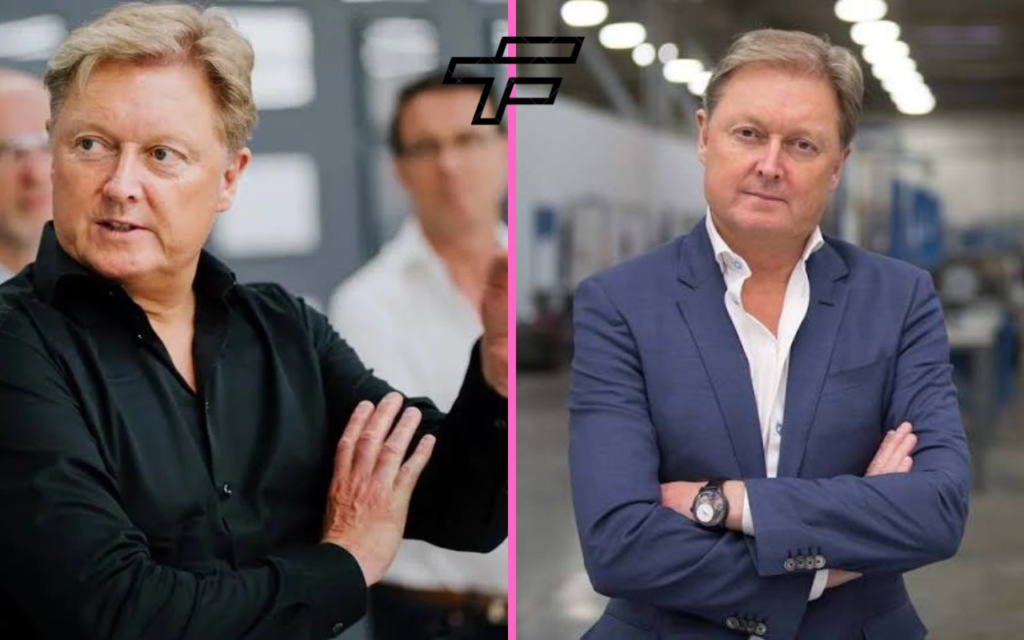
Henrik Fisker and James Quincey are two well-known business figures who have built their professional reputations in very different industries. Henrik Fisker is recognized for his work in automotive design, luxury vehicles, and electric vehicle entrepreneurship, while James Quincey is known for his leadership at The Coca-Cola Company, one of the world’s most recognizable beverage businesses. Their careers offer valuable insights into business strategy, innovation, leadership, and the challenges of building successful companies.
Although Fisker and Quincey operate in different professional environments, both have experience making important decisions that affect products, customers, and business growth. Fisker has pursued ambitious ideas in the automotive industry, seeking to combine distinctive design with new vehicle technologies. Quincey developed his career through international management positions, eventually becoming Coca-Cola’s chief executive officer in 2017 and later transitioning to executive chairman in 2026.
Their professional stories also demonstrate that business success requires more than a promising idea or an established brand. It depends on strategic planning, financial management, customer understanding, and the ability to respond to changing market conditions. Understanding their backgrounds provides a useful way to explore two different approaches to modern business leadership.
1. Henrik Fisker’s Early Life and Passion for Automotive Design
Henrik Fisker was born in Denmark in 1963 and developed an interest in automobiles at a young age. His passion for vehicle design eventually led him to study at the ArtCenter College of Design, where he developed the creative and technical skills needed for a career in the automotive industry. His education helped him understand how design, engineering, and customer expectations come together when developing a vehicle.
Fisker began his professional journey with established automotive manufacturers, including BMW. One of his best-known contributions was his work on the BMW Z8 roadster, a luxury sports car admired for its distinctive styling. He later worked with Ford and Aston Martin, gaining experience in vehicle development and the premium automobile market. These positions exposed him to the importance of balancing attractive designs with engineering requirements and manufacturing costs.
Rather than limiting himself to employment within major manufacturers, Fisker gradually moved toward independent entrepreneurship. He wanted to develop vehicles that reflected his own creative vision and explore opportunities in a changing automotive market. His interest in alternative powertrains eventually became an important part of his business ambitions.
Fisker’s professional journey shows how specialized expertise can become the foundation for entrepreneurship. His design background helped him establish a recognizable identity, but his later ventures also demonstrated that running an automotive company requires financial planning, production management, and a sustainable commercial strategy.
2. Henrik Fisker and the Development of Electric Vehicles
Fisker’s entrepreneurial ambitions became particularly visible when he founded Fisker Automotive in 2007. The company introduced the Fisker Karma, a luxury plug-in hybrid sports sedan that combined premium styling with a powertrain designed to reduce reliance on conventional gasoline-only driving.
The Karma attracted attention because it offered a different appearance from many traditional luxury sedans. Its development reflected an early effort to bring electrified powertrains into a premium market, where customers often expected both performance and distinctive design.
However, developing and manufacturing vehicles proved difficult. Fisker Automotive experienced significant financial and operational challenges and filed for bankruptcy protection in 2013. Fisker subsequently left the company, and its assets were sold through bankruptcy proceedings. The experience demonstrated the substantial costs and risks associated with launching an independent automobile ‘
In 2016, Fisker launched another company, Fisker Inc., with the goal of developing all-electric vehicles. Its strategy included working with external manufacturing partners rather than building an entirely independent production system. The company sought to reduce some of the capital requirements associated with traditional automobile manufacturing while focusing on design, technology, and product development.
One of its principal products was the Fisker Ocean, an electric SUV introduced to customers in 2023. Despite initial interest, the company encountered production, software, customer service, and financial difficulties. Fisker Inc. filed for Chapter 11 bankruptcy protection in June 2024. Its subsequent bankruptcy proceedings underscored the difficulties of transforming an ambitious electric vehicle concept into a sustainable business.
Fisker’s experience remains relevant to discussions about electric mobility because it illustrates both the opportunities in the sector and the risks involved in scaling a new automotive company.
3. James Quincey’s Early Life and Education
James Quincey followed a different professional path. Born in Britain in 1965, he studied electronic engineering at the University of Liverpool. His education gave him a technical foundation, but his career developed primarily through business consulting, international operations, and corporate leadership.
Before joining Coca-Cola, Quincey worked as a partner in strategy consulting at The Kalchas Group, a consulting business associated with experience from major management consulting firms. This work exposed him to business strategy, organizational challenges, and the decisions companies must make when competing in changing markets.
Quincey joined The Coca-Cola Company in Atlanta in 1996 as director of learning strategy for its Latin America Group. He subsequently held a series of operational positions in the region, allowing him to understand the company’s business from the perspective of different markets.
His responsibilities expanded over time. He became president of Coca-Cola’s South Latin division in 2003 and later led its Mexico division from 2005 to 2008. These positions gave him experience managing regional business operations, responding to local consumer preferences, and coordinating the activities needed to distribute products across large markets.
His career progression demonstrates the value of learning different parts of an organization before taking on its highest leadership responsibilities. Rather than rising directly into the chief executive role, Quincey developed his experience through years of international management.
4. James Quincey’s Rise to Leadership at Coca-Cola
Quincey’s advancement continued when he became president of Coca-Cola’s Northwest Europe and Nordics business unit in 2008. In 2013, he became president of the company’s Europe Group, where he was responsible for a broad regional operation. His work included developing the company’s brand portfolio and strengthening its position in competitive beverage markets.
In 2015, Quincey became president and chief operating officer of Coca-Cola. These positions placed him closer to the overall management of the corporation and prepared him for its most senior executive role.
He became chief executive officer in May 2017 and was elected chairman of the board in 2019. During his tenure, Coca-Cola continued developing its identity as a broader beverage company rather than relying exclusively on its traditional flagship cola products. The company expanded its portfolio and focused on consumer preferences across different beverage categories.
Quincey also led the company through the COVID-19 pandemic, a period when restrictions, changes in consumer behavior, and disruptions to restaurants and other sales channels affected the beverage industry. Managing these challenges required attention to distribution, operating costs, employee needs, and changing demand.
In December 2025, Coca-Cola announced that Henrique Braun would succeed Quincey as CEO effective March 31, 2026. Quincey then
5. Comparing Their Leadership Styles and Business Strategies
Henrik Fisker and James Quincey illustrate two different approaches to leadership. Fisker’s career has been driven by product design, entrepreneurial ambition, and attempts to introduce new ideas into the automotive market. Quincey’s career, by contrast, developed through operational management and the leadership of an established multinational corporation.
Fisker’s work required him to develop concepts that could attract customers and investors. In the automotive sector, a vehicle must combine visual appeal with reliability, safety, engineering quality, and a price that customers are willing to pay. A business must also manage suppliers, production schedules, software development, and after-sales support.
Quincey’s responsibilities involved managing a complex network of beverage brands, bottling partners, retailers, and distribution systems. Coca-Cola’s global scale means that its leaders must consider different markets, consumer preferences, regulatory environments, and commercial relationships simultaneously.
Their approaches also reflect different financial circumstances. An automotive startup often needs substantial investment before it can generate consistent revenue. A company such as Coca-Cola has an established customer base and distribution infrastructure, although it must continue investing to remain competitive.
Neither environment eliminates business risk. Fisker’s experience illustrates the difficulties of scaling an entrepreneurial venture, while Quincey’s career highlights the challenge of maintaining growth and relevance within a large international organization.
6. Innovation, Consumer Demand, and Market Competition
Innovation has been central to both careers, although the meaning of innovation differs between their industries.
For Fisker, innovation has involved vehicle design, electric powertrains, and efforts to create automobiles that appeal to customers interested in premium styling and alternative forms of mobility. The electric vehicle market offers opportunities for new companies because emerging technologies can change traditional expectations about vehicle performance, software, and ownership.
Nevertheless, consumer interest alone does not guarantee commercial success. Buyers also expect dependable products, accessible maintenance, competitive pricing, and confidence that manufacturers will provide support after a purchase. Fisker Inc.’s difficulties highlighted how weaknesses in these areas can affect a company’s future.
For Quincey, innovation involved expanding Coca-Cola’s position across a wider beverage portfolio and adapting the company’s operating model. Consumer preferences can change in response to health concerns, economic conditions, cultural trends, and interest in different flavors or beverage categories.
Large consumer companies must therefore introduce new products while maintaining the quality and availability of established brands. They also need to make sure that marketing and distribution strategies work across markets with different requirements.
The comparison shows that innovation is most effective when it addresses genuine customer needs and is supported by reliable execution. New technology, distinctive design, and strong branding can create opportunities, but businesses must still deliver products that meet consumer expectations.
7. Financial Challenges and Important Business Lessons
The careers of Fisker and Quincey demonstrate that financial management is essential regardless of the size or maturity of a business.
Fisker’s ventures operated in a capital-intensive industry. Developing vehicles, meeting regulatory standards, managing suppliers, and establishing production capabilities require substantial resources. Even a promising vehicle can struggle commercially when production costs, delivery schedules, financing needs, or customer support fail to align.
Fisker Inc.’s bankruptcy in 2024 provides a clear example of these risks. The company faced difficulties involving its Ocean SUV and its broader operations, while attempts to secure a sustainable business arrangement proved unsuccessful. Its collapse showed that automotive design expertise must be matched by operational and financial capabilities.
Quincey’s experience illustrates a different set of financial responsibilities. At Coca-Cola, management decisions affect a global business with numerous brands, distribution relationships, and regional operations. Leadership requires decisions about investment, efficiency, product development, marketing, and long-term growth.
A mature company has advantages that a startup may lack, but it must still respond to competition and changes in consumer behavior. Its established position can be weakened if it fails to adapt.
For entrepreneurs and corporate managers alike, the broader lesson is that strategy must be supported by realistic financial planning, effective execution, and the ability to respond when circumstances change.
8. Are Henrik Fisker and James Quincey Connected Professionally?
Henrik Fisker and James Quincey are relevant to a discussion of business leadership because both have held influential roles in their respective industries. However, their professional backgrounds are distinct, and the available information does not establish a direct business partnership, joint venture, or shared executive role between them.
Fisker’s documented work centers on automotive design and the companies he founded to develop luxury and electric vehicles. Quincey’s professional history centers on Coca-Cola, where he held regional management positions before becoming CEO and later executive chairman.
Their names can therefore be discussed together as part of a broader comparison of entrepreneurship and corporate leadership. It would not be accurate, however, to claim that they collaborated on a specific business project without reliable evidence.
The distinction matters because a meaningful business comparison does not require a direct personal connection. Their careers provide different examples of how leaders approach product development, market opportunities, investment, and organizational challenges.
9. Conclusion
Henrik Fisker and James Quincey represent two distinct paths to prominence in international business. Fisker built his reputation through automotive design and entrepreneurship, working with major manufacturers before launching companies focused on luxury and electric vehicles. His experiences demonstrate the opportunities available to creative entrepreneurs, as well as the financial and operational challenges of building a vehicle manufacturer.
James Quincey developed his career within Coca-Cola, gaining international management experience before becoming CEO in 2017. His leadership involved guiding a global beverage company through changing consumer preferences, business challenges, and strategic development. In 2026, he transitioned to executive chairman as Henrique Braun became CEO.
Although the two figures work in different industries and have no established direct partnership, their careers offer valuable lessons about innovation, leadership, and sustainable growth. Fisker’s story emphasizes the importance of turning ambitious product ideas into reliable, commercially viable businesses. Quincey’s career demonstrates the importance of operational experience, international strategy, and long-term organizational development.
Ultimately, both examples show that successful leadership requires more than a strong vision. It also requires careful planning, an understanding of customers, financial discipline, and the ability to adapt to changing market conditions.