
Introduction
The term Hitler haircut is widely used to describe a hairstyle associated with Adolf Hitler and the appearance of young men during Nazi Germany. The expression has become particularly familiar in discussions about men’s grooming, historical fashion, military hairstyles, and the evolution of the modern undercut. Although the name sounds like a specific haircut, it can refer to more than one style. Some people use it to describe Adolf Hitler’s recognizable dark hair, side part, and short mustache, while others use it for the undercut hairstyle associated with members of the Hitler Youth organization.
Hairstyles often reflect the culture, fashion, and social expectations of a particular period. During the 1930s and 1940s, men’s haircuts were influenced by military traditions, European fashion, and political movements. The Nazi period gave certain hairstyles strong historical associations that continue to influence how people interpret them today.
Understanding the Hitler haircut requires looking beyond its appearance. Its history involves traditional barbering, political symbolism, popular culture, and the development of men’s hairstyles. Although similar haircuts remain popular today, their modern versions are not necessarily connected to the political beliefs or organizations with which the original styles became associated.
1. What Is the Hitler Haircut?
The Hitler haircut is an informal expression used for hairstyles connected with Adolf Hitler and Nazi-era men’s fashion. It does not describe one officially established haircut. Instead, the term is commonly applied to two different appearances that are sometimes confused with each other.
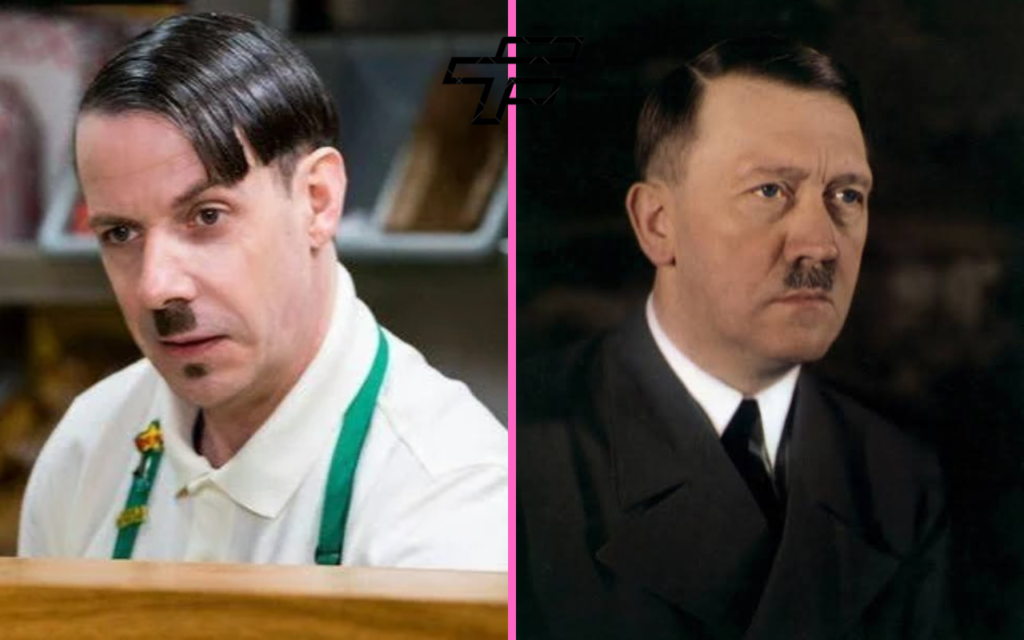
The first is Adolf Hitler’s personal hairstyle. He usually wore his dark hair combed to one side, with a noticeable section falling toward his forehead. His appearance was carefully maintained and became recognizable through photographs, newspaper coverage, speeches, and historical film recordings.
The second style is the undercut associated with the Hitler Youth and other young men during the period. This haircut generally featured longer hair on top and much shorter hair on the sides and back. The difference in length created a noticeable contrast.
Both hairstyles became connected with the Nazi period, but they were not identical. Hitler’s personal appearance should not be confused with the different grooming styles worn by members of youth organizations, soldiers, and ordinary German civilians.
2. Adolf Hitler’s Famous Hairstyle and Personal Appearance
Adolf Hitler developed a highly recognizable public appearance during his political career. His dark hair, side-combed arrangement, small rectangular mustache, and formal clothing made him easy to identify in photographs and public appearances.
His hairstyle was relatively simple compared with many modern men’s hairstyles. The hair was kept short enough to remain controlled but long enough at the front to create a distinctive forelock. He generally combed the hair toward one side, creating a neat and structured appearance.
His public image was carefully presented. Political photographs, speeches, rallies, and official appearances helped establish a consistent visual identity. His hairstyle became one part of that identity, although it was not independently responsible for his political influence.
Historical interest in Hitler’s appearance has continued because photographs and film footage provide a visual record of Nazi Germany. Researchers examining his public image often consider clothing, facial appearance, gestures, and presentation together rather than treating his haircut as an isolated fashion choice.
3. The History of the Hitler Youth Haircut
The expression Hitler Youth haircut is commonly associated with a short-sided hairstyle that became recognizable during the 1930s and 1940s. The Hitler Youth was a Nazi organization that played an important role in the regime’s efforts to influence and control young people in Germany.
The organization promoted discipline, loyalty to the Nazi state, physical training, and ideological education. Its members were presented through carefully controlled public images, photographs, uniforms, and organized events.
Some young men during this period wore hairstyles with relatively long hair on top and closely trimmed sides. These styles were also found in broader European fashion and military grooming traditions. Therefore, it would be historically inaccurate to suggest that every undercut belonged to the Hitler Youth or that the organization invented the hairstyle.
The haircut became associated with the period partly because of photographs and popular representations of young German men. Over time, the historical association influenced the terminology used by barbers, fashion writers, and the general public.
4. Main Features of the Hitler Haircut
The features of the haircut depend on which version someone is discussing. Adolf Hitler’s personal hairstyle was based on a traditional side part, while the Hitler Youth-inspired undercut had a more noticeable difference between the top and sides.
The traditional version generally has short-to-medium hair arranged toward one side. The front section is combed across the forehead, creating a recognizable shape. The overall appearance is controlled, with relatively little variation in length.
The undercut version has longer hair on the upper part of the head. The sides and back are clipped much shorter, sometimes with a sharp transition between the two lengths. The top can be combed backward, sideways, or allowed to fall naturally.
Hair texture can also affect the final appearance. Straight hair usually creates a more defined shape, while thicker or wavy hair may produce additional volume. Modern versions can be adapted to different head shapes and personal preferences.
5. How the Hairstyle Became Historically Controversial
The controversy surrounding the Hitler haircut comes mainly from its association with Adolf Hitler, Nazi Germany, and the Hitler Youth. These historical connections make the terminology different from the names used for ordinary contemporary hairstyles.
Nazi Germany was responsible for the Holocaust, the systematic persecution and murder of six million European Jews, and the persecution of millions of other people. The regime also initiated the Second World War in Europe, leading to enormous destruction and loss of life.
Because of this history, symbols, clothing, slogans, and visual styles associated with Nazi organizations can carry serious political meaning. A hairstyle may appear ordinary in isolation, but the name used to describe it can create a different impression.
It is important to distinguish between discussing historical fashion and promoting Nazi ideology. Studying the hairstyle provides an opportunity to understand how everyday appearance can become connected with political identity and historical memory.
6. The Difference Between a Hitler Haircut and a Traditional Undercut
The traditional undercut has a much broader history than its association with Nazi Germany. Similar hairstyles were worn by working-class men in Britain and other parts of Europe before Hitler became a major political figure. During the early twentieth century, the style became increasingly familiar among men who preferred short sides and longer hair on top.
The undercut was practical in several ways. Shorter sides required less attention, while the longer upper section allowed men to create different appearances using combs, oils, and styling products. During the First World War, short military haircuts also became common because they were easier to maintain in demanding conditions.
The modern undercut has developed into several variations. A disconnected undercut creates a strong difference between the top and sides, while a faded undercut gradually reduces the hair length around the head. A classic undercut generally maintains a more traditional shape.
These differences are important because the word Hitler haircut can create confusion. Someone asking for an undercut at a barbershop may simply want a fashionable hairstyle without any interest in its historical nickname.
7. The Role of Grooming Products and Barbering in the 1930s
Men’s grooming was an important part of fashion during the early twentieth century. In the 1920s and 1930s, neatly arranged hair became associated with a polished and respectable appearance. Men regularly visited barbershops to maintain their hair and facial hair.
Hair products also influenced the appearance of popular hairstyles. Brilliantine, pomades, and other oily preparations helped men create smooth, shiny hairstyles. These products made it easier to keep longer hair in place and maintain a neat side part throughout the day.
The development of commercial grooming products reflected wider changes in consumer culture. Advertising encouraged men to pay attention to their appearance, while film actors and public figures influenced popular grooming choices. Men’s hairstyles were increasingly discussed in magazines and other forms of popular media.
The Hitler-era hairstyle existed within this wider fashion environment. It was not created in isolation, and its appearance reflected grooming practices that were already familiar in European society.
8. The Modern Popularity of the Hitler Youth-Inspired Haircut
The undercut experienced renewed popularity during the 2010s. Many young men began choosing hairstyles with closely trimmed sides and longer hair on top. The style appeared in fashion magazines, barbershops, television, films, and social media.
In contemporary fashion, the same basic haircut is usually described as an undercut, disconnected undercut, slicked-back undercut, or high-and-tight variation. These names focus on the haircut’s structure rather than its historical associations.
The renewed interest in vintage men’s fashion also contributed to its popularity. Tailored suits, traditional shoes, classic watches, and carefully styled hair became familiar elements of several contemporary fashion trends.
However, the historical nickname remained controversial. Some people found it uncomfortable because of its connection with Nazi Germany, while others considered it an exaggerated reference to an ordinary hairstyle. This debate demonstrates how fashion can carry different meanings depending on historical knowledge and social context.
9. How People Interpret the Hairstyle Today
Today, the meaning of a haircut depends on more than the length of someone’s hair. Clothing, accessories, behavior, symbols, and the surrounding social environment can influence how an appearance is understood.
A person wearing a conventional undercut is not automatically expressing support for Adolf Hitler or Nazi ideology. The hairstyle existed before the Nazi period and has been adopted by people from many different backgrounds.
At the same time, the historical connection should not be ignored. Deliberately using Nazi references, symbols, or slogans alongside a hairstyle can communicate a political message that goes beyond personal grooming.
For this reason, many modern barbers prefer neutral descriptions such as classic undercut or side-part undercut. These terms explain the requested style without unnecessarily connecting it to a violent political movement.
Understanding this distinction makes conversations about the haircut more accurate. It also helps people recognize the difference between historical references, modern fashion, and extremist political symbolism.
Conclusion
The Hitler haircut is a historically recognizable hairstyle with connections to Adolf Hitler, Nazi Germany, and the Hitler Youth. However, the expression describes more than one appearance, including Hitler’s traditional side-combed hairstyle and the undercut associated with young men during the 1930s and 1940s.
The history of the undercut shows that it existed before the Nazi period and developed through broader European fashion, working-class culture, and military grooming traditions. Its later association with Nazi Germany gave it a controversial historical reputation that remains relevant today.
In modern fashion, similar hairstyles are widely worn under neutral names such as undercut, disconnected undercut, and slicked-back undercut. Understanding the difference between historical symbolism and contemporary grooming helps explain why the hairstyle continues to attract attention. Ultimately, the Hitler haircut is an example of how an ordinary element of personal appearance can acquire a complicated meaning through history, politics, and popular culture.