
introduction
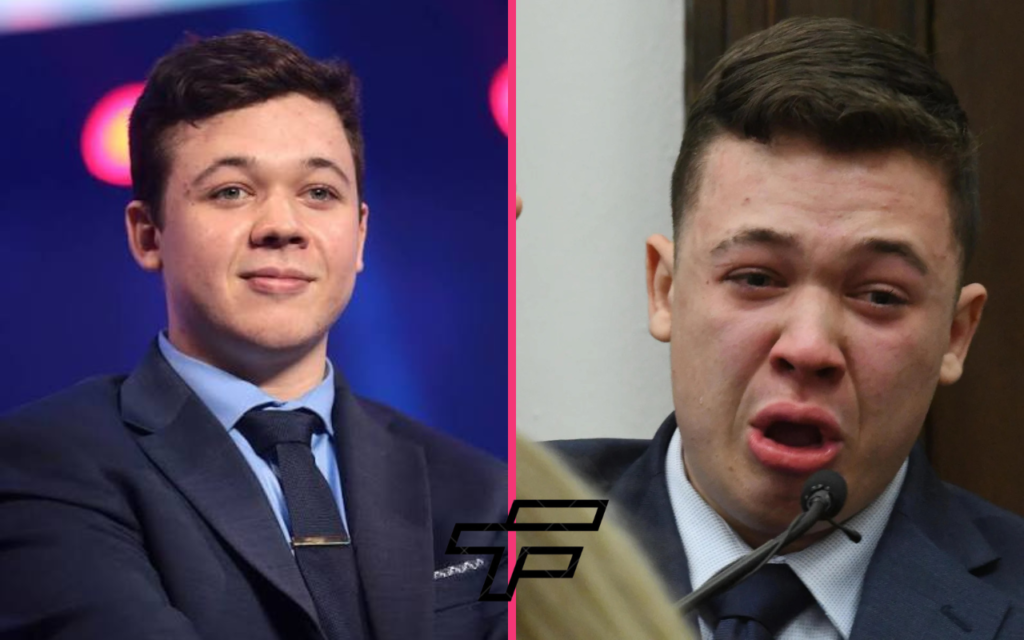
The phrase “Kyle Rittenhouse crying” became widely recognized online after a dramatic moment during Kyle Rittenhouse’s criminal trial in November 2021. Rittenhouse broke down in tears while testifying about the events that took place in Kenosha, Wisconsin, in August 2020. The courtroom scene was broadcast to a national audience, and screenshots of his emotional reaction quickly spread across social media. Within hours, the footage had become both a major news story and a popular internet meme.
The incident attracted attention for several reasons. It occurred during a highly controversial criminal trial, involved a young defendant facing serious charges, and became part of a wider national debate about guns, protests, self-defense, and the American justice system. While some viewers interpreted the tears as an emotional response to a traumatic experience, others criticized the display or turned it into online humor. Understanding the original courtroom moment requires looking beyond the viral images to the events that led to the trial and the legal outcome that followed.
The Background of Kyle Rittenhouse
Kyle Rittenhouse became a nationally known figure following the shootings that occurred in Kenosha, Wisconsin, on August 25, 2020. He was 17 years old at the time and had traveled from Illinois to Kenosha during unrest following the police shooting of Jacob Blake, a Black man who was seriously injured by a white police officer.
The incident involving Blake sparked protests, demonstrations, and unrest in the city. During the same period, some residents and other individuals attempted to protect businesses and property from damage. Rittenhouse later testified that he had traveled to Kenosha to help protect property and provide medical assistance to people who were injured.
Rittenhouse carried an AR-style rifle that night. During a series of confrontations, he shot three people, killing Joseph Rosenbaum and Anthony Huber and injuring Gaige Grosskreutz. These events became the central issue in the criminal case against him.
The shootings generated intense disagreement across the United States. Supporters argued that Rittenhouse had acted in self-defense, while critics questioned his decision to enter a tense protest environment while carrying a rifle. The competing interpretations made the case a major subject of news coverage, political discussion, and social media commentary.
What Happened When Kyle Rittenhouse Started Crying?
The viral crying moment occurred on November 10, 2021, when Rittenhouse testified in his own defense at the Kenosha County Courthouse. During his testimony, he described the events leading up to the first fatal shooting, involving Joseph Rosenbaum.
As Rittenhouse recounted the confrontation, his voice became strained and he began sobbing. He struggled to continue speaking, and the emotional scene prompted Judge Bruce Schroeder to pause the proceedings and allow a break. The incident was captured by courtroom cameras and quickly circulated through television reports and online video platforms.
The moment was particularly striking because Rittenhouse had been answering questions in a formal legal setting before becoming visibly overwhelmed. His mother, Wendy Rittenhouse, was also present in the courtroom and became emotional during the episode.
After the break, the testimony continued. Rittenhouse described his understanding of the encounters and maintained that he had fired his weapon because he believed he was in danger. His defense depended heavily on the argument that his actions were legally justified as self-defense.
The footage attracted attention not only because of the tears themselves but also because it appeared during testimony about a fatal confrontation. The seriousness of the underlying events made the courtroom scene more consequential than an ordinary emotional moment captured on camera.
Why Was Rittenhouse Emotional During His Testimony?
During the trial, Rittenhouse described his encounter with Joseph Rosenbaum and said he feared for his safety. According to his testimony, Rosenbaum had pursued him and threatened him before the shooting. Rittenhouse also described the other confrontations that occurred later that evening.
The emotional breakdown happened while he was recounting the first confrontation. Reports from the courtroom described him struggling to speak as he remembered the sequence of events. His testimony was important because the jury needed to assess his account of what happened and consider whether his use of force met the legal standard for self-defense.
However, the exact reasons behind a person’s emotional response cannot be established simply by watching a video. The footage shows that Rittenhouse cried, but it cannot independently prove whether his reaction reflected fear, distress, trauma, pressure from the trial, or a combination of emotions.
This distinction became important in public discussion. Some viewers saw the tears as an understandable response to revisiting a frightening and consequential experience. Others questioned the meaning of the display and argued that emotional reactions should not influence judgments about the evidence.
The courtroom moment therefore became a subject of interpretation as well as a piece of recorded testimony. The legal questions in the case still depended on the evidence, witness accounts, applicable law, and the jury’s assessment rather than on tears alone.
The Legal Charges and the Importance of the Trial
Rittenhouse’s trial began on November 1, 2021, and focused on the shootings in Kenosha the previous year. Prosecutors brought charges arising from the deaths of Rosenbaum and Huber, the injury to Grosskreutz, and the circumstances surrounding Rittenhouse’s use of his rifle.
The prosecution and defense presented different interpretations of the confrontations. Prosecutors challenged Rittenhouse’s account and examined his actions before and during the shootings. The defense argued that he had been attacked and had used force to protect himself.
Under the law, the jury had to consider the evidence and determine whether the prosecution had proved the charges beyond a reasonable doubt. Rittenhouse’s decision to testify gave jurors an opportunity to hear his description of the events directly, but it also subjected him to questioning from the prosecution.
His emotional testimony became one of the most memorable moments of the proceedings. Nevertheless, crying was not itself evidence that established guilt or innocence. The verdict depended on the full record presented in court.
On November 19, 2021, the jury found Rittenhouse not guilty on all charges. The decision brought the criminal trial to an end but did not end the public debate about the shootings, the conduct of those involved, or the broader questions raised by the case.
How the Crying Video Became a Viral Meme
The spread of the Kyle Rittenhouse crying meme began almost immediately after his testimony on November 10, 2021. News organizations published footage of the courtroom moment, and users on Twitter, now known as X, began sharing screenshots and short clips.
According to Know Your Meme, the earliest documented versions circulated on Twitter that day. Users quickly transformed the emotional expression into a reaction image, adding captions that placed the courtroom scene in unrelated everyday situations. The format became popular because a single facial expression could be used to communicate embarrassment, disappointment, frustration, or exaggerated sadness.
The meme spread beyond its original political context. Some posts used the image to comment on relationships, arguments, awkward conversations, or situations in which someone appeared to be seeking sympathy. Others used it to criticize Rittenhouse or express opposition to his actions. The same image could therefore carry very different meanings depending on the caption and the audience.
The speed of the meme’s growth demonstrated how social media can transform a serious news event into a reusable visual format. Once screenshots became detached from the original video, many people encountered the image without necessarily knowing the details of the testimony or the criminal case.
Public Reactions and Political Controversy
The crying footage produced sharply divided reactions. Some people expressed sympathy for Rittenhouse, arguing that recounting a frightening confrontation in a courtroom could naturally provoke an emotional response. Others regarded the scene with skepticism and questioned whether it should influence public perceptions of the case.
The disagreement reflected the wider political divisions surrounding the Kenosha shootings. Supporters of Rittenhouse frequently emphasized his self-defense argument, while critics focused on his decision to travel to Kenosha with a rifle during a period of unrest. These different perspectives shaped how viewers interpreted the same courtroom footage.
Commentary also raised broader questions about the role of emotion in public life. An emotional display can influence how an audience perceives a person, but it does not automatically establish whether that person’s actions were justified. The same principle applies to criminal trials, where legal decisions must be based on evidence and the relevant standards of law.
The meme culture surrounding the trial sometimes reduced these complicated issues to jokes or political insults. Although humor can help explain why an image spreads so widely, it can also remove important context from an event involving real people who were killed or injured.
The Role of Social Media and Internet Culture
The Kyle Rittenhouse crying meme illustrates how internet culture processes major news events. Social media platforms allow users to capture a brief expression, reproduce it, add text, and share it with audiences far removed from the original setting.
Reaction images are especially effective because they communicate emotion quickly. A viewer does not need to watch a full courtroom recording to understand the intended joke in a meme. A caption can transform the same expression into a comment about a disappointing result, an uncomfortable conversation, or a moment of exaggerated sadness.
The original footage was also available through established news organizations, including The Washington Post, which published video of Rittenhouse breaking down during his testimony. This helped the moment reach a large audience beyond people who had been following the trial closely.
As the image circulated, its meaning changed. In news coverage, the crying scene was part of a defendant’s testimony about a fatal encounter. In a meme, it often became a symbol of embarrassment or melodramatic emotion. That transformation is common in digital culture, where images are repeatedly reused and reinterpreted.
The meme’s popularity also highlights a limitation of short-form content: a screenshot can preserve an expression while removing the events that explain why it occurred. Anyone seeking to understand the incident should distinguish between the original testimony, news reporting, political commentary, and humorous edits.
The Trial Verdict and Its Lasting Significance
On November 19, 2021, the jury found Kyle Rittenhouse not guilty on all charges brought against him in the criminal trial. The verdict followed days of testimony, examination of evidence, legal arguments, and jury deliberations. It meant that the prosecution had not secured convictions on the charges presented.
The decision received extensive national coverage and prompted further discussion about self-defense law, firearms, protests, and the criminal justice system. For many observers, the verdict represented a significant legal decision about the circumstances of the shootings. Others remained deeply critical of the events that led to the case and the broader social environment in which they occurred.
The crying video continued to circulate after the trial ended. Its popularity was no longer tied solely to live courtroom coverage; it had become a recognizable reference to the case and a widely reused internet reaction image.
The legal outcome is essential context for understanding the meme’s history, but it should not be confused with the public arguments that developed around the verdict. A jury’s decision resolves the criminal charges before it, while public debate about the events and their wider implications can continue.
Conclusion
The phrase “Kyle Rittenhouse crying” describes a courtroom moment that became one of the most recognizable images associated with his 2021 criminal trial. On November 10, Rittenhouse broke down while describing his encounter with Joseph Rosenbaum, prompting the judge to pause the proceedings. The footage soon spread across news outlets and social media, where screenshots became reaction images and memes.
The incident gained attention because it combined an emotional courtroom scene with a highly divisive case involving shootings during unrest in Kenosha, Wisconsin. Public reactions ranged from sympathy to criticism, reflecting disagreements that extended far beyond the video itself.
Although the meme became a source of online humor, its origins were part of a serious legal proceeding involving two deaths and one injury. Rittenhouse was ultimately found not guilty on all charges on November 19, 2021. Understanding the viral image therefore requires both recognizing its role in internet culture and remembering the legal and human context behind it.