
Introduction
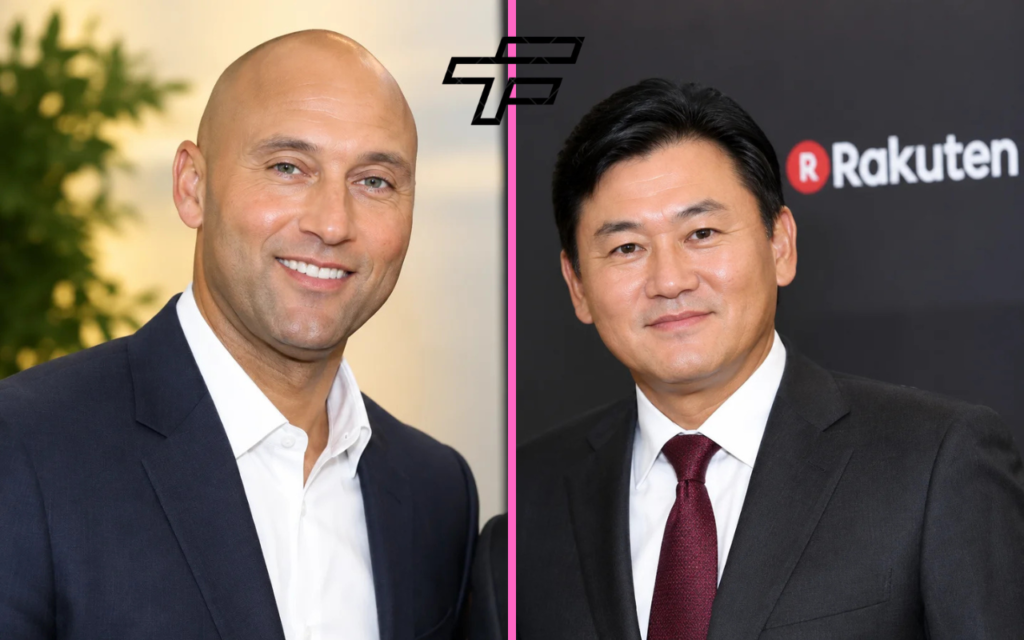
Derek Jeter and Hiroshi Mikitani are influential figures whose careers highlight the relationship between professional baseball, business leadership, and international sports. Jeter became one of the most celebrated players in the history of the New York Yankees, while Mikitani built Rakuten into a major Japanese technology and e-commerce company and became an important figure in professional sports ownership. Although they followed different career paths, both demonstrate how baseball can create opportunities that extend far beyond the playing field.
Derek Jeter is widely recognized for his leadership, championship victories, and remarkable consistency during his two-decade Major League Baseball career. Hiroshi Mikitani is known for his entrepreneurial vision, investment in sports, and role in developing the Tohoku Rakuten Golden Eagles in Japan. Their professional stories provide an interesting comparison between an athlete who moved into business and an entrepreneur who invested in professional baseball.
Understanding Derek Jeter and Hiroshi Mikitani requires looking at their individual backgrounds, achievements, leadership styles, and contributions to the sports industry. It is also important to distinguish their shared connection to baseball from any direct personal or professional relationship, which should not be assumed without reliable evidence.
Who Is Derek Jeter?
Derek Sanderson Jeter was born on June 26, 1974, in Pequannock Township, New Jersey, United States. He grew up in Kalamazoo, Michigan, where baseball became an important part of his life. From an early age, Jeter showed a strong interest in the sport and developed the skills that eventually helped him reach professional baseball.
The New York Yankees selected Jeter with the sixth overall pick in the 1992 Major League Baseball draft. After developing his abilities in the minor leagues, he made his major league debut in 1995. By the following season, he had established himself as an important member of the Yankees lineup.
Jeter spent his entire major league playing career with the Yankees, appearing at shortstop from 1995 through 2014. His consistency, confidence, and ability to perform in important games made him one of the most recognizable athletes in American sports.
Throughout his career, Jeter collected 3,465 regular-season hits, won five World Series championships, and earned 14 All-Star selections. He also received the American League Rookie of the Year Award in 1996 and the World Series Most Valuable Player Award in 2000.
His influence was not limited to statistics. Jeter became the Yankees’ captain in 2003, reflecting the respect he had earned from teammates, coaches, and supporters. In 2020, he was elected to the National Baseball Hall of Fame, cementing his place among baseball’s most important historical figures.
Who Is Hiroshi Mikitani?
Hiroshi Mikitani is a Japanese entrepreneur best known for founding Rakuten, a company that grew from an online shopping business into a diversified international organization. His career demonstrates how technology, entrepreneurship, and long-term investment can transform a business and create opportunities in different industries.
Mikitani was born on March 11, 1965, in Japan. He studied economics at Hitotsubashi University and began his professional career at the Industrial Bank of Japan in 1988. He later attended Harvard Business School, earning a Master of Business Administration degree in 1993.
After gaining experience in banking and business, Mikitani founded the company that became Rakuten in 1997. The business initially focused on online commerce, connecting merchants with customers through a digital marketplace. As internet use expanded, Rakuten developed additional services and entered new markets.
Over time, the company expanded into financial services, digital payments, travel, communications, and other technology-related activities. Mikitani’s strategy centered on developing a broad ecosystem in which different services could support customer relationships and business growth.
His interest in sports became another part of this wider vision. Rather than approaching professional baseball as a former athlete, Mikitani entered the industry as a business leader and owner. His involvement with the Tohoku Rakuten Golden Eagles helped establish Rakuten as a recognizable name in Japanese professional baseball.
Derek Jeter’s Historic Success With the New York Yankees
Derek Jeter’s career with the Yankees represents one of the defining periods of modern baseball. The team won five World Series championships during his playing career, in 1996, 1998, 1999, 2000, and 2009. Jeter played an important role in these championship campaigns and became closely associated with the organization’s winning tradition.
His first major breakthrough came in 1996, when he won the American League Rookie of the Year Award. That season also ended with a World Series championship, giving him an impressive beginning to his professional career.
The Yankees continued to dominate during the late 1990s. Their championships in 1998, 1999, and 2000 established the team as a powerful force in baseball. Jeter’s offensive contributions, defensive work, and leadership helped make him one of the central figures in that successful period.
In 2000, Jeter delivered an especially memorable postseason performance and received the World Series Most Valuable Player Award. The Yankees defeated the New York Mets in the Subway Series, giving the city a championship celebrated by baseball fans across the region.
Jeter’s career also demonstrated the importance of consistency over time. Maintaining a high level of performance for 20 seasons required discipline, preparation, and the ability to adapt to changing circumstances.
When he retired after the 2014 season, he left behind a legacy built on achievement and professionalism. His Hall of Fame election further recognized his influence on the game and his importance to the Yankees organization.
Hiroshi Mikitani and the Creation of the Rakuten Golden Eagles
Hiroshi Mikitani entered professional baseball through business ownership rather than athletic competition. In 2004, Rakuten became involved in the restructuring of Japanese professional baseball and established a new club, the Tohoku Rakuten Golden Eagles.
The team began competing in Nippon Professional Baseball in 2005. Based in Sendai, the Golden Eagles represented the Tohoku region of northeastern Japan and quickly became an important part of the area’s sporting identity.
The creation of the club took place during a period of change in Japanese baseball. The restructuring of existing teams had raised questions about the future of the league, and Rakuten’s entry provided a new organization with the opportunity to develop a competitive team.
Mikitani’s involvement connected professional sports with the broader ambitions of his company. The Golden Eagles provided a recognizable brand, a connection with local supporters, and an opportunity to participate in one of Japan’s most popular sports.
The club’s greatest early achievement came in 2013, when it won its first Japan Series championship. The victory was particularly meaningful because the Tohoku region had suffered devastating damage from the earthquake and tsunami of March 2011.
The championship became a source of pride for many supporters and demonstrated the emotional significance of professional sports within a community. It also strengthened the Golden Eagles’ identity as an important regional institution.
Through this project, Mikitani showed how a business executive could contribute to professional sports by investing in a team, developing its organization, and supporting its long-term presence.
The Connection Between Derek Jeter and Hiroshi Mikitani
The relationship between Derek Jeter and Hiroshi Mikitani is best understood through their shared involvement in the broader baseball industry. Jeter built his reputation as a player and later became a sports executive, while Mikitani became an owner and investor through his business activities.
Their careers illustrate two different routes to influence in professional baseball. One developed through years of competition at the highest level, while the other emerged through entrepreneurship and investment in sports organizations.
However, their shared interests do not establish that they have a close personal relationship or a direct business partnership. Publicly established career information about the two men does not, by itself, demonstrate that they have worked together on a particular project.
Their names can nevertheless be compared in discussions of baseball’s international business environment. Major League Baseball in the United States and Nippon Professional Baseball in Japan operate within different systems, but they share commercial opportunities, international audiences, and a common interest in developing the sport.
Baseball has also become increasingly international through player movement, broadcasting, sponsorships, and cross-border fan communities. Well-known figures such as Jeter and Mikitani represent different aspects of this development.
Jeter’s international recognition comes primarily from his playing achievements and association with the Yankees. Mikitani’s influence comes from his business leadership and involvement in Japanese professional sports.
Baseball as an International Business
Baseball has developed into a global sports industry with connections to entertainment, technology, media, tourism, and advertising. Its popularity in both the United States and Japan creates opportunities for teams and companies to reach audiences across national borders.
Major League Baseball has attracted players from Japan, while Japanese leagues have benefited from international attention and connections with overseas organizations. These relationships have helped increase interest in baseball beyond its traditional markets.
Jeter’s career with the Yankees placed him at the center of one of the most recognizable sports brands in the world. His achievements and public profile made him familiar to fans who followed baseball outside the United States.
Rakuten’s involvement in Japanese sports illustrates a different aspect of this international industry. A company can use professional sports to build brand recognition, strengthen relationships with customers, and develop a visible role in local communities.
Sports ownership also creates responsibilities that go beyond marketing. Teams must manage players, coaching staff, facilities, ticket sales, sponsorship agreements, and relationships with supporters. Long-term success depends on balancing sporting ambitions with financial and organizational needs.
For entrepreneurs such as Mikitani, professional sports can become part of a larger commercial strategy. For athletes such as Jeter, a successful playing career can create opportunities to enter media, management, investment, and other business activities.
Derek Jeter’s Career After Retirement
Jeter’s retirement from professional baseball in 2014 marked the beginning of a new stage in his career. Rather than leaving the sports industry completely, he moved into media, entrepreneurship, philanthropy, and team management.
One of his most notable projects was The Players’ Tribune, a media platform launched in 2014. The platform gives athletes an opportunity to share personal experiences and communicate directly with audiences. Its approach reflects the changing relationship between sports figures, journalism, and digital media.
Jeter also became involved in publishing, working with Simon & Schuster on a publishing imprint that produced books for different audiences. These activities allowed him to explore opportunities beyond his playing career.
In 2017, Jeter became part of the ownership group that acquired the Miami Marlins. He served as the team’s chief executive officer, participating in decisions related to the organization’s business operations and baseball strategy.
His tenure with the Marlins ended in February 2022, when he and the club announced their separation. Jeter also left the ownership group.
His post-playing career demonstrates the challenges and opportunities that come with moving from athletics into executive leadership. The skills required to succeed as a professional player are not identical to those needed to manage a sports organization, but his experience provided a foundation for his work in the wider industry.
Hiroshi Mikitani’s Business Vision and Leadership
Mikitani’s leadership at Rakuten reflects a long-term approach to entrepreneurship and digital business. The company expanded from online shopping into a wide range of services, creating a network of businesses connected by technology and customer relationships.
His involvement in sports fits into this broader approach. The Golden Eagles provide Rakuten with a prominent presence in Japanese baseball and a direct relationship with supporters in the Tohoku region.
Sports organizations can help companies establish emotional connections that are difficult to create through ordinary commercial transactions. Fans often develop lasting loyalty to their teams, making professional sports an important part of community life.
However, sports investments also require patience and sustained organizational effort. A team’s reputation depends on its performance, management, player development, and ability to maintain relationships with its supporters.
The Golden Eagles’ 2013 championship demonstrated the potential rewards of developing a competitive club over time. The team’s success strengthened its place in Japanese baseball and contributed to its significance in the Tohoku region.
Mikitani’s career also shows that business leadership can extend into areas that have cultural and social importance. His work combines commercial objectives with participation in a sport that has a long history in Japan.
Conclusion
Derek Jeter and Hiroshi Mikitani represent two distinct paths to influence in professional baseball. Jeter became one of the New York Yankees’ greatest players, earned five World Series championships, and developed a career in business and sports management after retirement. Mikitani built Rakuten into a major technology company and helped establish the Tohoku Rakuten Golden Eagles as an important Japanese baseball team.
Their careers demonstrate how baseball connects athletes, entrepreneurs, companies, and communities. Jeter’s story highlights the transition from sporting achievement to business leadership, while Mikitani’s experience shows how entrepreneurship and investment can shape professional sports.
Although a direct personal or business relationship between them should not be assumed without reliable evidence, their achievements provide an interesting comparison. Both have contributed to the wider baseball industry in different ways, showing that the influence of professional sports reaches far beyond the playing field.