
Introduction
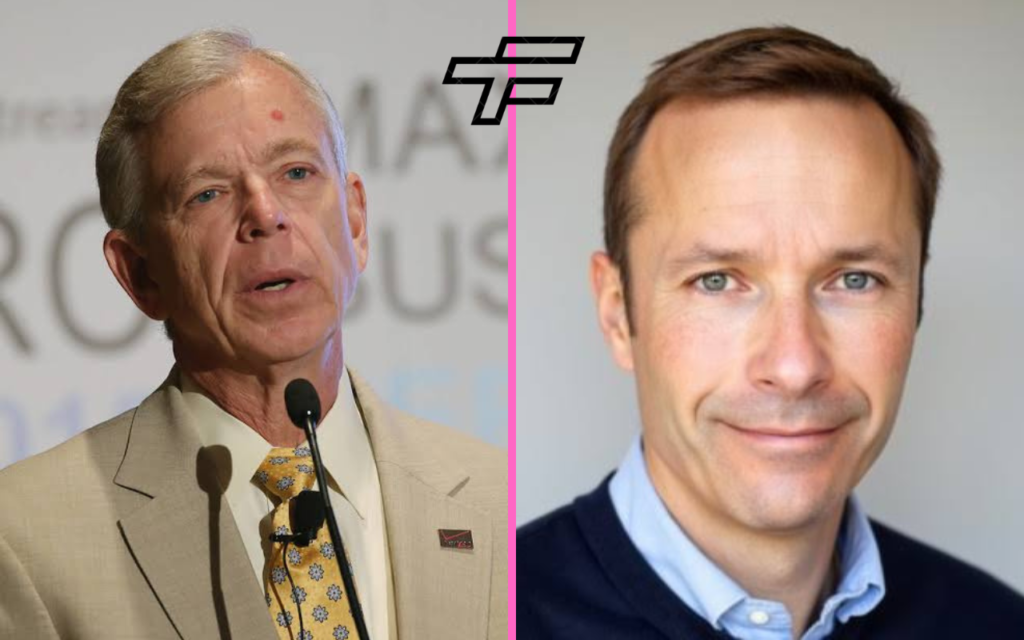
Lowell McAdam and Akio Toyoda are two influential business executives who built their careers in different industries but faced similar challenges in leading large international companies. McAdam is best known for his leadership at Verizon Communications, one of the major telecommunications companies in the United States. Toyoda is widely recognized for his role at Toyota Motor Corporation, the Japanese automotive manufacturer known for its global reach, manufacturing methods, and vehicle technology.
Their professional journeys offer an interesting comparison of leadership, innovation, corporate strategy, and long-term business development. McAdam worked in an industry shaped by wireless communication, broadband networks, and the rapid growth of digital services. Toyoda operated in an automotive industry influenced by international competition, manufacturing efficiency, environmental concerns, and changing customer expectations.
Both executives held senior positions at companies that required substantial investment and careful planning. Verizon needed to expand its communications infrastructure while responding to competition and new technology. Toyota needed to preserve its reputation for quality while developing vehicles suited to changing markets.
Although Lowell McAdam and Akio Toyoda did not lead the same company or share identical professional backgrounds, their careers illustrate how executives guide established businesses through periods of transformation. Their experiences also demonstrate why operational knowledge, customer trust, and strategic decision-making remain important in the global business environment.
Lowell McAdam’s Early Career and Professional Development
Lowell C. McAdam developed his professional background through engineering, military service, and telecommunications management. He served for six years in the United States Navy Civil Engineer Corps and later became a licensed professional engineer. His technical experience helped establish a foundation for a career in an industry where infrastructure, reliability, and operational planning are essential.
Before becoming Verizon’s chief executive, McAdam held leadership positions at Pacific Bell, AirTouch Communications, and PrimeCo Personal Communications. These roles gave him experience in the development of wireless services during a period when mobile communication was becoming increasingly important to consumers and businesses.
He joined Verizon Wireless during its early development in 2000 and served as its president and CEO from 2007 to 2010. He subsequently became Verizon Communications’ president and chief operating officer before taking over as CEO in August 2011. In January 2012, he also became chairman of the company.
This progression through technical and executive positions gave McAdam an understanding of both network operations and corporate strategy. Telecommunications requires significant investment in physical infrastructure, wireless spectrum, software, and customer service. His experience across these areas was relevant as Verizon prepared for growing demand for mobile data and increasingly connected services.
Akio Toyoda’s Background and Rise at Toyota
Akio Toyoda was born on May 3, 1956, in Japan. He graduated from Keio University with a law degree in 1979 and earned an MBA from Babson College in 1982. He joined Toyota Motor Corporation in April 1984 and developed experience across multiple parts of the company’s business.Toyoda’s professional development included production, marketing, product planning, purchasing, and international operations. One important stage came in 1998, when he became an executive vice president and board member at New United Motor Manufacturing, Inc., known as NUMMI. The California facility was a joint venture between Toyota and General Motors, providing him with experience in a different manufacturing environment and business culture.
After returning to Japan, Toyoda assumed increasingly senior responsibilities. He joined Toyota’s board in 2000 and later oversaw areas that included operations in Asia, China, and other international markets. In 2005, he became an executive vice president with responsibilities spanning product quality, purchasing, information technology, sales, and overseas operations.
In June 2009, Toyoda became Toyota’s president. He led the company through a period of economic uncertainty and significant changes in the global automotive market. In April 2023, he transitioned to the position of chairman of the board, while Koji Sato became president and CEO.
Business Strategies and Major Corporate Decisions
McAdam’s Verizon strategy placed considerable emphasis on wireless infrastructure and network ownership. A major milestone occurred in 2014, when Verizon acquired Vodafone’s 45 percent stake in Verizon Wireless for approximately $130 billion. The transaction gave Verizon full ownership of its wireless business and greater control over its strategic direction.
McAdam also pursued acquisitions intended to expand Verizon’s presence in digital media and related services. The company purchased AOL in 2015 and Yahoo’s core internet business in 2017. These investments reflected an ambition to combine telecommunications with digital advertising and online content. However, the media strategy also faced challenges as Verizon competed with established digital platforms.
Toyoda’s strategy at Toyota focused on maintaining manufacturing quality while preparing for changes in the automotive market. Toyota’s production system emphasized reducing waste, improving efficiency, and identifying problems early. These principles helped the company build a global reputation for dependable vehicles and disciplined manufacturing.
Under Toyoda, Toyota continued to invest in hybrid technology while exploring battery-electric vehicles, hydrogen fuel cells, and other approaches to lower-emission transportation. His preference for a range of powertrain options became a subject of industry debate, particularly as electric vehicle adoption accelerated in some markets.
The strategies of the two executives reflected their companies’ different commercial realities. Verizon needed to keep networks competitive and attract subscribers, while Toyota needed to develop vehicles that met customer expectations, regulatory requirements, and manufacturing constraints.
Technology, Innovation, and Global Competition
Innovation was central to both leadership careers. At Verizon, McAdam oversaw a period of rapid growth in mobile data usage. Smartphones changed how people communicated, accessed information, worked remotely, and consumed entertainment. These changes increased the need for network capacity and reliable wireless coverage.
Verizon invested heavily in infrastructure during McAdam’s leadership, including the development of its 4G LTE network and preparations for 5G. The company also expanded fiber infrastructure and explored services for connected devices and businesses. Such investments required long-term planning because telecommunications networks must support customers continuously while being upgraded.
At Toyota, innovation involved much more than designing new cars. Automotive manufacturers must coordinate mechanical engineering, electronics, software, safety systems, batteries, production processes, and global supply chains. Toyota’s hybrid vehicles demonstrated one way to reduce fuel consumption without requiring customers to rely entirely on charging infrastructure.
Toyoda also maintained a visible interest in motorsports and driving. His enthusiasm helped communicate the idea that vehicles should provide an engaging experience in addition to practical transportation. Toyota continued to participate in motorsports and develop performance-oriented vehicles while working to meet changing environmental and safety expectations.
Both companies operated in international markets where competitors could quickly challenge established advantages. Verizon faced pressure from rival telecommunications providers, while Toyota competed with traditional automakers and newer electric vehicle manufacturers. Their experiences show that innovation requires sustained investment rather than a single successful product or decision.
Leadership Challenges and Lasting Influence
McAdam’s leadership period involved difficult decisions about acquisitions, infrastructure spending, competition, and the future direction of Verizon. Buying Vodafone’s stake in Verizon Wireless strengthened ownership of a central business, while the digital media acquisitions represented a more uncertain attempt to diversify revenue. His time as CEO ended on August 1, 2018, when Hans Vestberg succeeded him. McAdam subsequently served as non-executive chairman until the end of 2018.
Toyoda faced challenges involving vehicle quality, production disruptions, changing consumer preferences, and the transition toward lower-emission transportation. Toyota’s approach to electrification has drawn both support and criticism, illustrating the difficulty of predicting which technologies will dominate different markets.
His long career has also received recognition beyond Toyota. In August 2025, he was inducted into the Motoring Hall of Fame for his contributions to the automotive industry. This recognition reflected his influence on the company and his longstanding involvement in automotive business and motorsports.
The two executives’ careers demonstrate that corporate leadership is not limited to immediate financial results. Decisions about infrastructure, products, acquisitions, and technology can shape a company’s competitiveness for years. Their influence must also be understood in the context of the employees, engineers, suppliers, and other leaders who contribute to corporate performance.
Conclusion
Lowell McAdam and Akio Toyoda built influential careers by leading major companies through periods of technological and commercial change. McAdam helped guide Verizon through the expansion of mobile data, major network investments, the acquisition of full ownership of Verizon Wireless, and efforts to enter digital media. Toyoda guided Toyota through global manufacturing challenges, product development, and debates about the future of automotive technology.
Their professional backgrounds were different, but both executives relied on operational experience and long-term planning. McAdam’s career highlights the importance of reliable communications infrastructure, while Toyoda’s career demonstrates the complexity of balancing manufacturing quality, customer needs, and technological innovation.
Their stories offer valuable insights into the responsibilities of leading a global business. Sustainable success requires understanding the market, investing carefully, responding to competition, and adapting to changing customer expectations. The careers of Lowell McAdam and Akio Toyoda show how these responsibilities shape the development of major companies in an increasingly connected and competitive world.