
Introduction
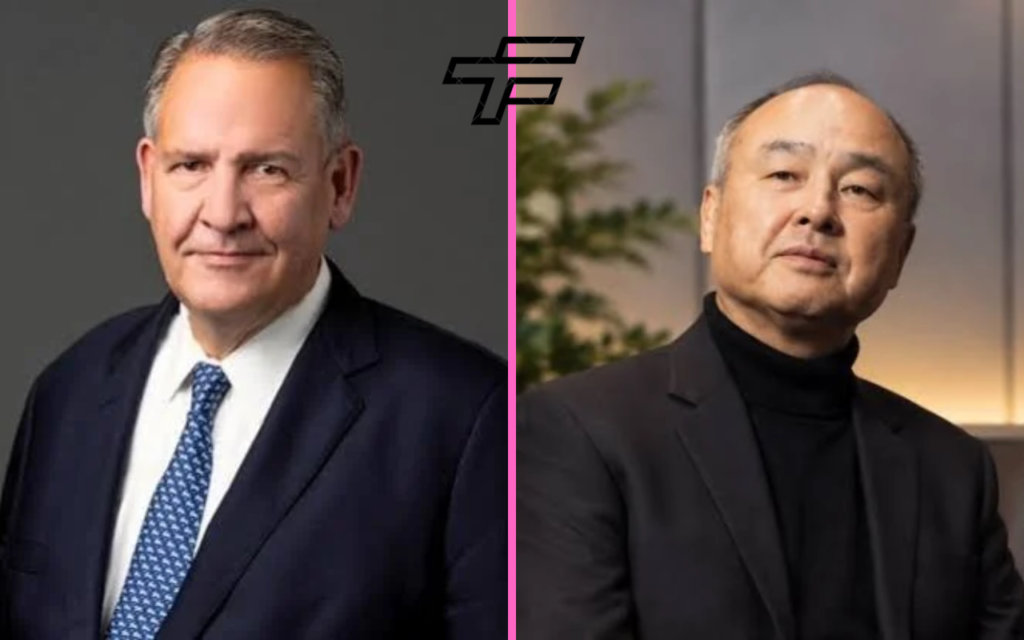
Masayoshi Son and Greg Hayes are two well-known business leaders whose careers reflect different approaches to corporate growth, investment, and innovation. Masayoshi Son is a Japanese entrepreneur and the founder of SoftBank Group, an international investment holding company with interests in telecommunications, semiconductors, artificial intelligence, and technology businesses. Greg Hayes is an American corporate executive known for leading United Technologies Corporation and serving as chief executive of RTX, a major aerospace and defense company.
Although the two executives built their careers in different industries, both have been involved in important corporate transformations. Son developed SoftBank from a software distribution business into an international technology investment group. Hayes helped restructure United Technologies and oversaw the formation of Raytheon Technologies, now known as RTX Corporation.
Their professional histories demonstrate how leadership depends on strategic planning, financial decisions, and the ability to respond to changing markets. There is no established public evidence of a direct business partnership between Son and Hayes. However, comparing their achievements provides valuable insight into the relationship between technological innovation, investment, and industrial management.
Masayoshi Son’s Early Life and Entrepreneurial Background
Masayoshi Son was born on August 11, 1957, in Japan. He developed an interest in entrepreneurship and technology at an early age. He later moved to the United States to study at the University of California, Berkeley, where he pursued studies in economics and developed an understanding of the opportunities emerging in the computer industry.
After completing his education, Son returned to Japan with the ambition of building a business around technology. In 1981, he founded a company called Nihon SoftBank, initially focusing on distributing computer software. At that time, personal computers were becoming increasingly important, creating new opportunities for software developers, distributors, and technology companies.
Son recognized that the expansion of computer technology could support a much larger business than software distribution alone. His company gradually expanded into publishing, internet services, telecommunications, and international investments.
His willingness to pursue new markets became a defining feature of his leadership. Rather than keeping SoftBank limited to its original business, Son repeatedly adjusted its direction to reflect changes in technology and consumer demand.
This entrepreneurial approach also involved considerable risk. Investing in emerging industries requires executives to make decisions before the future commercial value of a technology is fully understood. Son’s career has included successful investments as well as setbacks, illustrating the uncertainty associated with ambitious business strategies.
SoftBank Group and Its Global Investment Strategy
SoftBank Group became the central platform for Son’s long-term business ambitions. The company developed from a software distribution business into an international organization with interests in technology, telecommunications, and investment management.
One of SoftBank’s most widely discussed investments was its early backing of Alibaba, the Chinese e-commerce company. Alibaba eventually became a major international technology business, and SoftBank’s investment demonstrated the potential financial rewards of supporting a company during its early growth.
Another significant development was SoftBank’s acquisition of Arm in 2016. Arm develops processor architectures and related semiconductor technology used in smartphones, computing equipment, and numerous electronic devices. Its technology has become increasingly important as businesses demand efficient computing systems for mobile applications, cloud infrastructure, and artificial intelligence.
SoftBank also developed the Vision Fund platform to invest in technology companies around the world. These investments covered areas including digital services, automation, transportation, and emerging computing technologies.
However, the investment strategy has not always produced positive results. Some portfolio companies have experienced declining valuations, financial difficulties, or challenges in reaching profitability. Such outcomes illustrate the risks of investing heavily in rapidly changing markets.
Artificial intelligence has become a major focus of Son’s more recent strategy. The development of advanced computing systems, semiconductor technology, and AI infrastructure has created new investment opportunities. SoftBank’s continued interest in these areas reflects Son’s belief that artificial intelligence could become a major force in the global economy.
Greg Hayes’ Education and Corporate Career
Gregory J. Hayes, commonly known as Greg Hayes, is an American business executive whose career has focused on financial management, corporate restructuring, and industrial leadership. He studied economics at Purdue University and became a certified public accountant, establishing a foundation in finance and business administration.
Hayes joined United Technologies Corporation through its combination with Sundstrand Corporation in 1999. He subsequently held several senior management positions and became chief financial officer in 2008. His responsibilities included overseeing financial planning, capital allocation, and the company’s financial performance.
In 2014, Hayes became chief executive officer of United Technologies. He was appointed chairman in 2016, giving him a leading role in determining the company’s long-term strategy.
During his tenure, United Technologies underwent significant changes. The company had interests across multiple industrial sectors, but Hayes pursued a strategy designed to concentrate its remaining operations more heavily on aerospace.
This transformation required decisions about acquisitions, divestitures, and corporate organization. Hayes’ financial background was important because these transactions involved evaluating business assets, managing costs, and determining how different operations could contribute to future growth.
His career demonstrates how executives can use financial expertise to guide large industrial organizations through periods of change. Unlike a technology investor, an industrial leader must also account for production requirements, customer commitments, safety standards, and the technical demands of complex products.
The Formation of RTX Corporation
One of the most important milestones in Hayes’ career was the formation of Raytheon Technologies in 2020. The transaction combined United Technologies’ aerospace businesses with Raytheon Company, creating a major organization serving commercial aviation, defense, and related markets.
The combined company brought together three principal business areas: Collins Aerospace, Pratt & Whitney, and Raytheon. Collins Aerospace develops aircraft systems and equipment, Pratt & Whitney manufactures aircraft engines, and Raytheon focuses on defense systems and advanced technologies.
The combination created opportunities to bring together engineering capabilities, research resources, and customer relationships. The businesses could operate across related markets while maintaining specialized expertise in their respective fields.
However, integrating large organizations is a complicated process. Corporate leaders must coordinate employees, manage supply chains, integrate financial and operational systems, and ensure that existing customer commitments are maintained. Aerospace businesses also operate under demanding safety and regulatory requirements.
Hayes became chief executive of the combined organization in 2020. The company later changed its name to RTX Corporation. In May 2024, Hayes stepped down as CEO, and Christopher Calio succeeded him. Hayes subsequently left RTX’s board in April 2025.
His time at the company represented an important period of corporate restructuring and integration. The transformation illustrates how leadership decisions can change the structure of an established industrial business and influence its future direction.
Comparing Masayoshi Son and Greg Hayes’ Leadership Styles
Masayoshi Son and Greg Hayes developed their leadership styles in different business environments. Son’s career has been driven by entrepreneurship, investment, and a focus on emerging technologies. Hayes’ experience developed through financial management and the operation of large industrial organizations.
Son often pursues opportunities based on expectations about future technological development. His investment strategy involves identifying companies that may benefit from changes in computing, communications, automation, and digital services. This approach can generate substantial returns when investments succeed, but it can also expose SoftBank to considerable financial risk.
Hayes’ responsibilities were different. Aerospace and defense companies must deliver products that meet strict technical requirements and operate reliably over long periods. Their leaders must balance investment in innovation with manufacturing schedules, customer expectations, workforce requirements, and financial performance.
Both executives have faced decisions involving significant capital commitments. Son must assess whether an emerging technology company has the potential to become commercially successful. Hayes had to evaluate acquisitions, business separations, and restructuring decisions that could improve the performance of established industrial operations.
Their careers also demonstrate the importance of adapting to changing market conditions. SoftBank has repeatedly adjusted its investment priorities, while United Technologies changed its organizational structure to focus more heavily on aerospace.
Neither approach is universally suitable for every company. The most appropriate leadership strategy depends on the organization’s objectives, financial position, competitive environment, and operating requirements.
What Connects Masayoshi Son and Greg Hayes?
The main connection between Masayoshi Son and Greg Hayes is their experience leading major organizations through periods of change. Their professional careers demonstrate how executives can influence corporate strategy, allocate resources, and respond to developments in technology and global markets.
There is no established public evidence that Son and Hayes have a direct business partnership, share a corporate leadership role, or maintain a family relationship. Their careers are associated with separate organizations and different professional responsibilities.
Nevertheless, their industries have several overlapping interests. SoftBank invests in semiconductor technology, artificial intelligence, and computing infrastructure. Aerospace and defense companies rely on advanced electronics, software, data processing, and engineering systems to develop and operate modern products.
Artificial intelligence is one example of this broader connection. Investment companies may provide capital to businesses developing computing platforms, while industrial manufacturers explore ways to incorporate advanced computing into their products and operations.
The comparison also highlights different approaches to capital allocation. SoftBank evaluates investments across a portfolio of companies, while RTX must fund research, maintain manufacturing capabilities, and support complex products throughout their operating lives.
These shared themes make Son and Hayes useful subjects for comparison, even without evidence of direct collaboration. Their careers show how leaders in different sectors must evaluate technological opportunities, manage risks, and consider long-term business performance.
Technology, Innovation, and the Future of Business
Technology has become increasingly important to both investment organizations and industrial manufacturers. Artificial intelligence, semiconductor development, automation, and advanced computing are creating new opportunities while introducing new competitive challenges.
For SoftBank, these developments represent potential investment opportunities. The company can support businesses developing technologies that may become important across multiple industries. However, identifying a promising technology does not guarantee commercial success. Companies must demonstrate that their products solve real problems, attract customers, and generate sustainable revenue.
For aerospace and defense businesses, innovation must be combined with reliability and operational discipline. New systems must meet demanding performance standards, comply with regulations, and function within complex technical environments.
Corporate leaders therefore need to balance short-term financial results with long-term investment. Research and development may require years of funding before producing commercial benefits. Similarly, acquisitions and corporate restructuring may take time to deliver the expected improvements.
Son’s investment-oriented career and Hayes’ industrial management experience illustrate these challenges from different perspectives. Both demonstrate the importance of strategic planning, financial oversight, and understanding how technological changes affect markets.
Their experiences also show why business leadership requires more than ambitious goals. Executives must evaluate evidence, manage uncertainty, and adjust their strategies when circumstances change.
Conclusion
Masayoshi Son and Greg Hayes have made their marks on the business world through different approaches to leadership. Son transformed SoftBank into an international technology investment group with interests in telecommunications, semiconductor technology, and artificial intelligence. Hayes helped reshape United Technologies and led RTX during a significant period of corporate transformation.
Their careers demonstrate two different approaches to business growth. Son’s work emphasizes entrepreneurship, investment, and the pursuit of emerging technologies. Hayes’ experience highlights financial management, corporate restructuring, engineering operations, and the integration of large industrial businesses.
Although there is no established public evidence of a direct business partnership between them, comparing their professional histories provides valuable insight into leadership in the modern economy.
Ultimately, their experiences show that successful organizations need clear strategic priorities, responsible financial decisions, and the ability to respond to technological and economic changes. Whether managing a global investment group or an aerospace manufacturer, leaders must balance future opportunities with the practical demands of running a business.