
Introduction
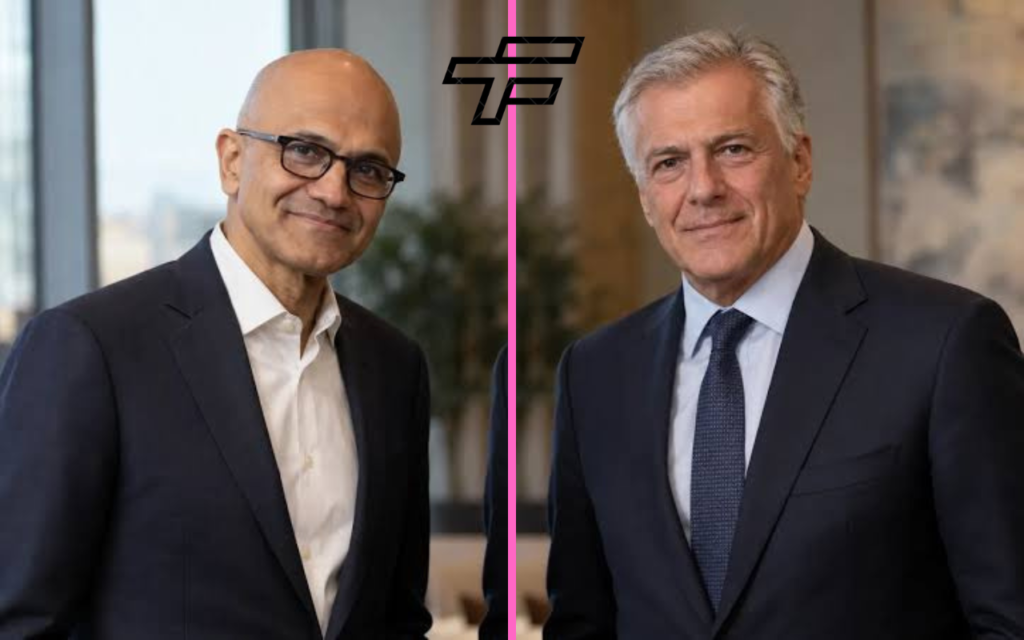
Satya Nadella and Michel Vounatsos are two prominent business executives whose professional careers developed in different industries but intersected around an important global issue: sustainability. Nadella is widely known for his leadership at Microsoft, one of the world’s most influential technology companies, while Vounatsos became recognized for his role as the former chief executive officer of Biogen, a biotechnology company specializing in treatments for serious neurological and neurodegenerative diseases.
The keyword “Satya Nadella and Michel Vounatsos” brings together two individuals with different areas of expertise, professional experiences, and corporate responsibilities. One helped guide a major technology company toward cloud computing and artificial intelligence, while the other led a pharmaceutical organization through important commercial, scientific, and business challenges. Despite these differences, their professional paths shared an interest in how large organizations can contribute to broader social and environmental goals.
Their most clearly documented connection is their participation in a November 2021 initiative supporting efforts to reduce carbon emissions across the United Kingdom’s National Health Service supply chain. Understanding this connection requires looking at their individual backgrounds, their leadership careers, and the growing importance of sustainability in modern business.
Satya Nadella’s Early Life and Educational Background
Satya Nadella was born on August 19, 1967, in Hyderabad, India. His early education and interest in technology helped prepare him for a career in the rapidly developing computer industry. He studied electrical engineering at Mangalore University before moving to the United States to continue his education. He earned a master’s degree in computer science from the University of Wisconsin–Milwaukee and later completed a Master of Business Administration at the University of Chicago.
Nadella’s education combined technical knowledge with business management. This combination became particularly valuable as computer technology evolved from traditional desktop software toward internet services, cloud platforms, and connected business systems. His academic background gave him an understanding of the technology itself, while his business education helped him approach decisions involving investment, competition, and organizational strategy.
Before joining Microsoft, Nadella worked at Sun Microsystems, a company known for its computing systems and enterprise technologies. In 1992, he joined Microsoft and began a long career that eventually took him to the highest levels of corporate leadership. Rather than becoming chief executive immediately, he developed his experience through several roles involving software, online services, business applications, and enterprise technology.
Satya Nadella’s Career and Leadership at Microsoft
Satya Nadella became Microsoft’s chief executive officer in February 2014. Before his appointment, he had served in several leadership positions within the organization, including executive vice president of its Cloud and Enterprise group. In that role, he helped expand Microsoft’s cloud infrastructure and services business, an area that would become central to the company’s future.
When Nadella assumed the CEO position, the technology industry was undergoing major changes. Businesses were increasingly adopting cloud computing, mobile services, and subscription-based software. Microsoft had a long history of success with Windows and Office, but it also needed to respond to changing customer expectations and competition from other technology companies.
Under Nadella’s leadership, cloud services became an increasingly important part of Microsoft’s business strategy. Microsoft Azure developed into a major platform for companies that wanted to operate applications, manage data, and build digital services without maintaining all their own computing infrastructure. Microsoft’s productivity products also expanded through cloud-based services, including Microsoft 365 and collaborative tools.
Another important aspect of Nadella’s leadership has been Microsoft’s growing investment in artificial intelligence. The company has integrated AI capabilities into products and services while expanding its work with external AI developers. These developments reflect a broader strategy of incorporating new technologies into the tools that businesses and individuals already use.
Nadella became Microsoft’s chairman in June 2021, in addition to serving as CEO. His leadership is associated with a period of significant technological change, although Microsoft’s results also depend on the work of its employees, research teams, partners, customers, and wider business environment.
Michel Vounatsos’s Early Career and Pharmaceutical Experience
Michel Vounatsos developed his career in the pharmaceutical and biotechnology industries rather than the technology sector. His education included medical studies at Université Victor Segalen Bordeaux II in France, where he received a Certificate of Clinical and Therapeutic Synthesis. He also earned an MBA from HEC Paris, giving him a combination of medical knowledge and business management training.
Before joining Biogen, Vounatsos spent approximately 20 years at Merck, the international pharmaceutical company also known as MSD in some markets. During that period, he held positions with increasing responsibility across Europe, China, and the United States. His experience included commercial strategy, primary care, and customer-focused business operations.
Working across different countries exposed him to the challenges of selling medicines in markets with different healthcare systems, regulations, commercial practices, and patient needs. Pharmaceutical companies must consider scientific evidence, regulatory approval, pricing, access to treatment, and the expectations of healthcare professionals. These responsibilities make international commercial leadership particularly complex.
Vounatsos’s background was therefore different from Nadella’s, but both executives developed their careers through large organizations in which technical or scientific expertise needed to be combined with business planning. Nadella worked with software and digital infrastructure, while Vounatsos focused on medicines and healthcare markets.
His appointment at Biogen in 2016 brought this experience into the biotechnology industry, where research and development decisions can involve substantial investment, long timelines, and considerable uncertainty.
Michel Vounatsos’s Leadership at Biogen
Biogen appointed Michel Vounatsos as executive vice president and chief commercial officer in 2016. He became chief executive officer on January 6, 2017, succeeding George A. Scangos. In November 2022, Biogen announced that Christopher Viehbacher would take over as president and CEO, ending Vounatsos’s tenure in the position.
Biogen is known for its focus on neurological and neurodegenerative diseases, including multiple sclerosis and conditions for which treatment options have historically been limited. Leading a company in this field requires balancing commercial performance with scientific research, clinical trials, regulatory requirements, and the needs of patients and healthcare professionals.
During Vounatsos’s tenure, Biogen continued developing its neuroscience portfolio and pursuing business development agreements. The company also faced difficult questions about drug development, commercial strategy, and the financial consequences of bringing innovative medicines to market. In biotechnology, promising research does not always translate into successful treatments, and approved medicines can face questions about their effectiveness, safety, affordability, and adoption.
These pressures illustrate the challenges of leading a pharmaceutical organization. Executives must support long-term scientific investment while maintaining financial discipline and communicating with investors, researchers, regulators, and patients. Vounatsos’s role placed him at the center of these competing priorities.
After leaving the CEO position, he continued to participate in the biotechnology sector through board and advisory roles. His subsequent appointments have included work with organizations involved in life sciences and neurological research, reflecting his continued connection to the industry.
The Connection Between Satya Nadella and Michel Vounatsos
The most clearly documented connection between Satya Nadella and Michel Vounatsos is their shared participation in an initiative supporting a more sustainable healthcare system. In November 2021, both appeared among the signatories of an open letter associated with the International Leadership Group for a Net Zero NHS. The letter focused on reducing carbon emissions throughout the supply chain serving the United Kingdom’s National Health Service.
Their participation is significant because the healthcare supply chain involves many different industries. Hospitals depend on medicines, medical equipment, digital systems, transportation, buildings, energy, and numerous other services. Reducing the environmental impact of healthcare therefore requires cooperation among healthcare providers, manufacturers, technology companies, and suppliers.
Microsoft’s role in the wider economy includes providing cloud infrastructure and software to businesses and public institutions. Biogen’s work involves pharmaceutical research, manufacturing, and the distribution of medicines. Although their operations are different, both organizations belong to the larger network of companies whose activities can influence the environmental footprint of healthcare.
The initiative reflected the growing recognition that climate considerations are relevant to the healthcare sector. Hospitals and healthcare organizations need reliable energy, equipment, medicines, and transportation, but these activities can also generate greenhouse gas emissions. Working with suppliers is one way to address emissions that occur outside an organization’s own buildings and direct operations.
However, the shared letter should not be mistaken for proof that Nadella and Vounatsos worked together on a private commercial project. The available documentation establishes their participation in the same sustainability initiative, not a personal friendship, family relationship, or formal partnership between the two executives.
Sustainability, Technology, and Healthcare
Sustainability provides a useful way to understand why leaders from apparently different industries may support the same initiative. Climate change can affect public health through extreme temperatures, air pollution, changing patterns of infectious disease, and other environmental pressures. Healthcare organizations must therefore consider both the health consequences of climate change and the environmental impact of their own operations.
Technology companies can contribute through more efficient digital infrastructure, data analysis, and tools that help organizations measure resource use. Cloud computing can reduce the need for some organizations to operate their own computing facilities, although the environmental benefits depend on factors such as data center efficiency, electricity sources, and demand for computing power. Digital technology is not automatically carbon-free, particularly as AI systems increase demand for computing resources.
Pharmaceutical companies face a different set of environmental challenges. Their activities may involve energy-intensive manufacturing, chemical production, packaging, refrigeration, transportation, and the management of materials used in research. Improving efficiency and reducing emissions across these processes can require investment, technical changes, and cooperation with suppliers.
The Net Zero NHS initiative highlighted the importance of addressing emissions beyond the direct operations of hospitals. Suppliers play an important role because healthcare institutions purchase products and services from a broad network of businesses. Commitments from senior executives can help bring attention to these issues, although real progress depends on measurable targets, transparent reporting, investment, and implementation.
For Nadella and Vounatsos, participation in the initiative connected their corporate leadership roles to a wider discussion about environmental responsibility. It also illustrated how business leaders can support shared goals even when their companies operate in different markets.
Comparing Their Leadership Styles and Professional Legacies
Satya Nadella and Michel Vounatsos built their careers around different types of organizations. Nadella’s work has centered on software, enterprise services, cloud computing, and artificial intelligence. Vounatsos’s experience has focused on pharmaceutical commercialization, international markets, biotechnology, and the development of treatments for serious diseases.
Their industries also operate on different timelines. Technology companies may introduce software updates and digital products relatively quickly, although major platforms can require years of research and investment. Pharmaceutical companies must conduct extensive scientific testing and clinical trials before many treatments can receive regulatory approval. The potential consequences of failure are also different, since medicines can directly affect patient health and safety.
Despite these differences, both careers demonstrate the importance of strategic planning and managing change. Nadella’s leadership has involved adapting Microsoft to new computing models and emerging technologies. Vounatsos’s leadership involved navigating the scientific, commercial, and financial demands of a biotechnology company.
Their professional experiences also demonstrate that corporate leadership extends beyond developing products or generating revenue. Large companies interact with governments, customers, employees, suppliers, researchers, and communities. Decisions about technology, medicine, investment, and sustainability can affect people far beyond a company’s immediate workforce.
Neither executive’s career can be reduced to a single initiative or business decision. Their broader legacies depend on the results of their respective organizations, the opportunities they helped create, the challenges they faced, and the long-term consequences of their strategic choices.
Conclusion
Satya Nadella and Michel Vounatsos are business leaders whose careers developed in distinct but influential industries. Nadella became a central figure in Microsoft’s evolution toward cloud computing and artificial intelligence, while Vounatsos built an international pharmaceutical career before leading Biogen from 2017 to 2022.
Their most clearly documented connection is their participation in the 2021 International Leadership Group for a Net Zero NHS initiative, which encouraged action to reduce emissions across the healthcare supply chain. This shared commitment provides a meaningful link between technology, biotechnology, and environmental responsibility.
Although there is no established evidence in the cited sources of a personal relationship or direct business partnership between them, their shared participation illustrates how executives from different sectors can support common public-interest goals. Their careers offer distinct examples of leadership, organizational change, and the responsibilities that come with managing large global businesses.