
Introduction
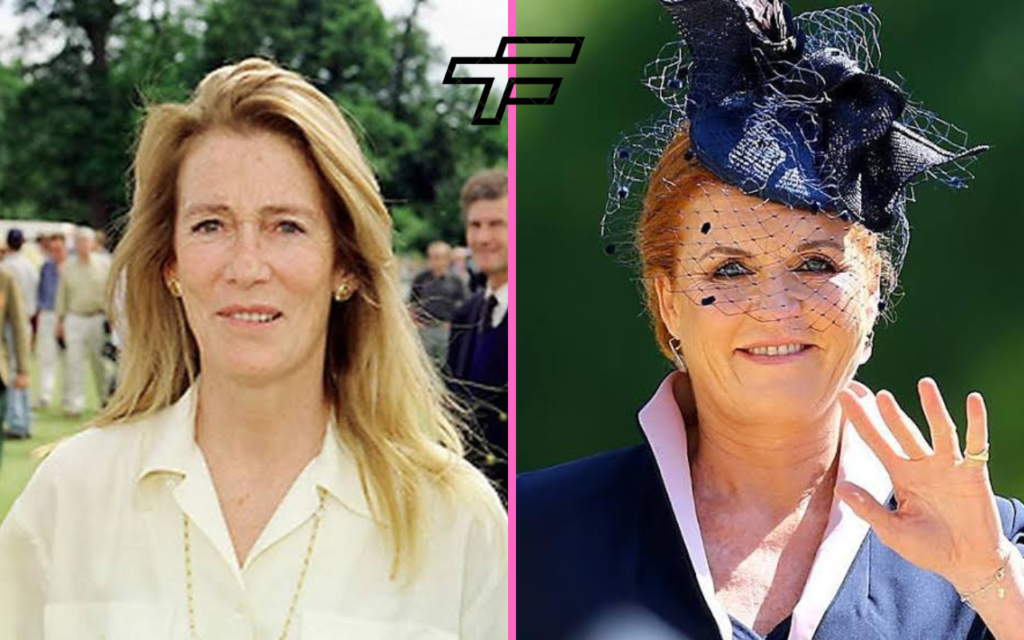
Susan Barrantes was a British woman best known as the mother of Sarah Ferguson, the former Duchess of York, and the maternal grandmother of Princess Beatrice and Princess Eugenie. Her life was marked by significant personal changes, including an aristocratic upbringing in England, marriage and motherhood, a move to Argentina, and a new career connected with horses and documentary filmmaking. Although she became associated with the British royal family through her daughter, Susan developed a life of her own far away from the public attention surrounding the royal household.
Born Susan Mary Wright on June 9, 1937, in Bramcote, Nottinghamshire, England, she grew up during a period of considerable social change. Her first marriage to Ronald Ferguson connected her with British society and the world of polo. However, her life took a different direction when she left England and established a home in Argentina with Argentine polo player Héctor Barrantes. The decision changed her family relationships, professional interests, and daily life.
Susan’s story remains interesting because it combines family history, personal independence, international relocation, and connections to prominent public figures. Her life also demonstrates that people associated with famous families can have personal experiences and ambitions that extend well beyond their public identities.
Early Life and Family Background
Susan Mary Wright was born on June 9, 1937, in Bramcote, Nottinghamshire, England. She grew up in a society where family background, social relationships, and established traditions played important roles in everyday life. Her childhood took place during the years surrounding the Second World War, a period that brought considerable changes to British families and communities.
Details about her early education and private childhood are limited in widely available biographical accounts. Nevertheless, her later marriage and social connections placed her within Britain’s upper-class circles. Her life was connected with a social environment in which horses, country estates, formal events, and relationships between prominent families could be important features.
Susan eventually became known to a wider audience through her marriage to Ronald Ferguson and the birth of their two daughters. Her younger daughter, Sarah, would later enter the international spotlight after marrying Prince Andrew, the Duke of York. This connection ensured that Susan’s background and personal history attracted attention from royal watchers and biographers.
However, her early life should not be understood only through her daughter’s later fame. Susan eventually made choices that took her away from familiar surroundings and established traditions. Her relocation to Argentina demonstrated that she was willing to pursue a different lifestyle rather than remain permanently within the British social environment in which she had grown up.
Marriage to Ronald Ferguson and Family Life
Susan married Ronald Ferguson on January 17, 1956, at St Margaret’s Church in Westminster, London. Ronald came from a family associated with horses and polo, and the sport later became an important part of his professional life. He served as an officer in the British Army and eventually became a prominent polo figure with connections to the royal household.
Ronald’s polo career brought him into contact with Prince Philip, Duke of Edinburgh, and he later worked as polo manager for Charles, then Prince of Wales. These professional relationships helped establish the Ferguson family’s connection with people around the British royal household, although Susan herself did not hold a royal title.
The couple had two daughters. Their elder daughter, Jane Louisa, was born on August 26, 1957, while their younger daughter, Sarah Margaret, was born on October 15, 1959. Jane later maintained a relatively private life, whereas Sarah became widely recognized as the Duchess of York.
For a period, Susan’s family life was closely connected with the traditions and social expectations of the British upper classes. However, her marriage to Ronald eventually encountered difficulties. The relationship ended in separation, and Susan decided to leave England in 1972 to begin a new life in Argentina. Her divorce from Ronald was finalized in 1974.
The separation changed the family dynamic considerably. Her daughters remained in Britain, primarily in their father’s care, while Susan established herself overseas. This decision would become one of the most significant aspects of her biography because it affected her relationship with her children and shaped the direction of her later life.
Relationship with Her Daughters, Sarah and Jane
Susan’s relationship with her daughters is an important part of her personal history. Her decision to move to Argentina meant that she was no longer present in their everyday lives in the same way as before. Although international travel and communication allowed family members to remain in contact, the distance created challenges that could not easily be overcome.
Sarah Ferguson later spoke about the emotional effect of her mother’s departure during childhood. Sarah described experiencing feelings of abandonment and insecurity after Susan left the family. These experiences became part of her personal story and influenced how she reflected on her upbringing as an adult.
Sarah’s later marriage to Prince Andrew in 1986 brought her into the British royal family through marriage. She became the Duchess of York, and her public responsibilities and media attention made her one of the most recognizable members of the extended royal family. Susan consequently attracted greater public interest as Sarah’s mother, even though she continued to live primarily in Argentina.
Susan was also the grandmother of Sarah and Andrew’s two daughters, Princess Beatrice and Princess Eugenie. Beatrice was born in 1988, and Eugenie followed in 1990. Both became prominent members of the extended royal family, ensuring that Susan’s family connection remained a subject of public interest.
Her elder daughter, Jane, followed a more private path and generally stayed away from the public attention surrounding Sarah. The two daughters therefore experienced very different relationships with fame, but both were part of Susan’s family history.
Susan’s decision to leave Britain remains a complicated aspect of her story. It represented an important personal change for her, but it also had emotional consequences for her children. Their experiences illustrate how choices made by parents can continue to influence family relationships long after childhood has ended.
Moving to Argentina and Marrying Héctor Barrantes
Susan’s move to Argentina transformed her life. She had developed a relationship with Argentine polo player Héctor Barrantes and chose to build a future with him in South America. After her divorce from Ronald Ferguson, Susan married Héctor in 1975 and settled into a new environment far removed from the British society in which she had spent her early adulthood.
Argentina offered a natural connection to the world of polo. The country has a long tradition of producing accomplished polo players and breeding horses for the sport. Its extensive countryside and established equestrian culture provided an environment in which Susan could develop new interests and responsibilities.
The couple made their home at El Pucará, an estate near Tres Lomas in Buenos Aires Province. The property became central to their life together and represented Susan’s commitment to her new home. Her daily routine increasingly revolved around the countryside, horses, business responsibilities, and the relationships she developed in Argentina.
The move was more than a change of address. Susan had left behind familiar social circles, her first marriage, and the country where her daughters were growing up. In Argentina, she created a different identity that was closely connected to Héctor and their shared interests.
Her years with Héctor were described in accounts of her life as a particularly happy period. She became more deeply involved in the polo community and explored professional activities related to horses. Although living so far from her daughters presented challenges, Argentina became the place where she spent much of the remainder of her life.
Her experience also illustrates the difficulties involved in building a new life in another country. Adapting to different social customs, maintaining family relationships across continents, and managing a rural property required considerable adjustment. Susan nevertheless remained committed to the life she had chosen.
Career in Polo and Documentary Filmmaking
Susan Barrantes developed professional interests connected to horses and polo during her years in Argentina. Her relationship with Héctor introduced her to the country’s equestrian culture, and her involvement in the sport gradually became an important part of her identity.
Polo is a team sport played on horseback in which riders use long-handled mallets to strike a ball toward the opposing team’s goal. It requires skilled riding, coordination, physical control, and a strong relationship between player and horse. Argentina is internationally known for its polo traditions, making it a natural setting for Susan’s growing interest in the sport.
Beyond her involvement in the polo environment, Susan pursued documentary filmmaking. She became interested in producing films about horses and the equestrian world, drawing on her experience and the people she encountered through her work. These projects provided an opportunity to document a subject that had become central to her life.
She also established a television production company in Buenos Aires, according to accounts of her professional activities. Her work demonstrated that her life in Argentina involved more than managing a home or participating in social events. She was developing professional interests and working to establish an independent role within her adopted country.
In 1997, Susan published a book titled Polo. The book reflected her interest in the sport and its traditions, and Charles, Prince of Wales, contributed the foreword. His involvement highlighted the continuing connections between Susan’s background, the British royal household, and the equestrian world.
Her professional activities were not as widely publicized as the life of her daughter Sarah, but they remain an important part of her story. Susan used her experiences in Argentina to explore a career connected with her interests, showing how a major personal change can also lead to new opportunities.
Life After Héctor Barrantes’s Death
Susan’s life changed significantly when Héctor Barrantes died of cancer in 1990. His death brought emotional loss and left Susan facing the responsibilities of managing the estate and the activities they had shared. The property and its connection to polo had been important elements of their life together, and continuing without him presented considerable challenges.
Maintaining a rural estate and a horse-related operation could be expensive. After Héctor’s death, Susan faced financial pressures while attempting to preserve her home and professional activities. Reports about her later years describe difficulties that made it increasingly challenging to maintain the property on its previous scale.
She eventually sold a substantial portion of the estate to Australian businessman and polo enthusiast Kerry Packer. The sale helped address her financial circumstances but also meant that she could no longer retain the entire property associated with her life with Héctor.
Susan continued to pursue interests in television production and horse-related documentaries. She spent time in Buenos Aires and remained involved in activities that reflected her professional experience. These projects allowed her to maintain a degree of independence despite the difficulties that followed her husband’s death.
Her later years were marked by a combination of grief, practical challenges, and determination. Rather than abandoning Argentina and returning permanently to Britain, she continued to identify the country as her home. Her attachment to the place reflected the significance of her years with Héctor and the life they had built together.
The period also revealed the more difficult side of her story. Although her family connections brought public attention, they did not remove the personal and financial challenges she faced. Her later life was shaped by the ordinary difficulties of loss and maintaining independence, just as much as by her connection to a famous family.
Connection to the British Royal Family
Susan Barrantes was not herself a member of the British royal family, but her family relationships connected her to several well-known royal figures. Her first husband, Ronald Ferguson, worked in the world of polo and had professional relationships with members of the royal household. Her daughter Sarah later became the Duchess of York through her marriage to Prince Andrew.
Sarah and Andrew married at Westminster Abbey on July 23, 1986. Their wedding received international attention, and Sarah became a prominent public figure through her position within the extended royal family. Susan consequently attracted interest from the media, which followed the backgrounds and personal lives of people connected to the couple.
Sarah and Andrew had two daughters, Princess Beatrice and Princess Eugenie. Susan was their maternal grandmother, although her residence in Argentina meant that she lived far from their everyday family environment in Britain.
Susan’s connection to the royal family also reflected the longstanding relationship between British aristocratic circles and polo. Ronald Ferguson’s work with Prince Philip and Charles helped connect the family to the sport, while Susan’s own interest in polo continued after she moved to Argentina.
These connections explain why her life attracted attention beyond her immediate family. Nevertheless, Susan’s significance should not be reduced to her royal associations. Her marriage to Héctor, her work in Argentina, and her decision to build a new life overseas were important parts of her individual history.
Her story demonstrates how people can become connected to public institutions through family relationships without personally holding an official position. It also shows how media interest can continue to follow a family even when individual members choose to live away from the spotlight.
Death in Argentina and Lasting Legacy
Susan Barrantes died on September 19, 1998, at the age of 61, following a road accident near Tres Lomas in Argentina. Reports described a collision involving her vehicle and a van on a rural highway. Her death brought renewed attention to her life and to her relationship with Sarah Ferguson and the extended British royal family.
The news was particularly painful for her family. Sarah had already experienced significant emotional challenges connected with her childhood and her mother’s decision to move abroad. Susan’s sudden death meant that their relationship could no longer develop through future visits or conversations.
Her death also attracted comparisons with the death of Diana, Princess of Wales, in August 1997. Both women had connections to the extended royal family, and both died in road accidents within a relatively short period. However, the circumstances of their accidents were different, and the comparison mainly reflected the public interest surrounding their family connections.
Susan was buried at El Pucará alongside Héctor Barrantes. The burial location reflected her strong attachment to Argentina and to the life she had built with her second husband. The estate had represented their shared home, their involvement in polo, and the professional interests that had become part of Susan’s identity.
Her legacy includes several different elements. She is remembered as the mother of Sarah Ferguson, the grandmother of Princess Beatrice and Princess Eugenie, and a woman who moved from Britain to Argentina to pursue a different life. Her professional activities involving horses, polo, and documentary filmmaking also form part of her story.
Susan’s life was not without difficult decisions or personal consequences. Her departure from Britain affected her daughters, while the death of Héctor and the financial pressures that followed created further challenges. Yet she continued to pursue her interests and remained attached to the country she had chosen as home.
Conclusion
Susan Barrantes lived a life defined by change, family relationships, personal decisions, and the search for independence. Born Susan Mary Wright in England in 1937, she married Ronald Ferguson in 1956 and became the mother of Jane and Sarah. Her younger daughter eventually became the Duchess of York through her marriage to Prince Andrew, connecting Susan to the extended British royal family.
However, Susan’s life extended well beyond this connection. Her decision to move to Argentina and marry Héctor Barrantes in 1975 opened a new chapter in which she became involved in polo, horse-related activities, documentary filmmaking, and writing. Following Héctor’s death in 1990, she faced financial difficulties but continued to work and maintain her attachment to Argentina.
Her death in a road accident on September 19, 1998, ended a life that had crossed countries, social environments, and personal challenges. Today, Susan Barrantes is remembered for her family connections, her years in Argentina, and her determination to establish a life different from the one she had originally known.
Her story remains a reminder that a person’s identity cannot be understood through famous relatives alone. Susan’s marriages, professional interests, personal choices, and experiences in Argentina all contributed to the legacy she left behind.