
Introduction
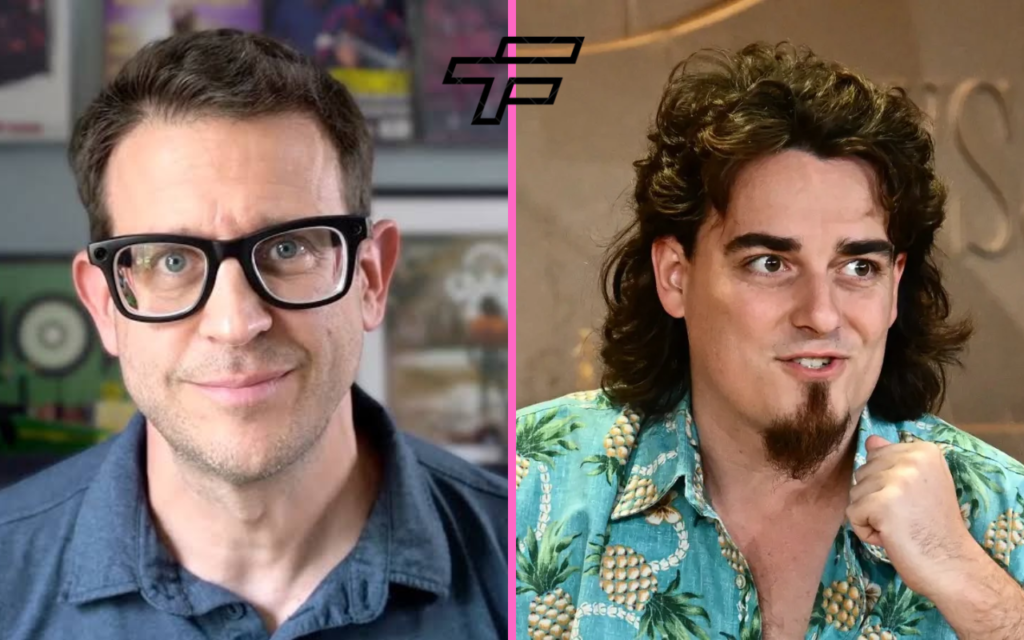
Palmer Luckey and Jeff Greene are two American entrepreneurs whose careers demonstrate different ways of building wealth and establishing a lasting business reputation. Palmer Luckey became widely recognized for developing virtual reality technology and later founded a defense technology company focused on artificial intelligence, autonomous systems, and modern military equipment. Jeff Greene, on the other hand, built his fortune through real estate investments, financial market strategies, and the ownership of valuable properties.
Although their professional backgrounds are very different, both men offer interesting examples of entrepreneurship, financial decision-making, and the opportunities that emerge when people recognize changes in the economy. Luckey’s career is closely connected to technological innovation, while Greene’s success is associated with property markets, investment planning, and understanding financial risk.
The relationship between their names is also worth examining carefully. Their careers place them within the broader world of wealthy American entrepreneurs, but that alone does not establish a direct business partnership or personal connection. Understanding their individual backgrounds, achievements, and professional activities provides a clearer picture of why both names attract public interest.
Palmer Luckey’s Early Life and Interest in Technology
Palmer Luckey was born on September 19, 1992, in Long Beach, California. From an early age, he developed a strong interest in computers, electronics, and video games. His curiosity about how electronic devices worked encouraged him to experiment with hardware and explore ways to improve existing technology.
Unlike many entrepreneurs who begin their careers after completing university degrees and entering established companies, Luckey developed many of his technical interests through independent experimentation. He spent time learning about electronics, modifying devices, and exploring the possibilities of immersive digital experiences. These activities eventually helped him recognize an opportunity in virtual reality, a field that had attracted considerable interest but had not yet achieved widespread consumer adoption.
Luckey’s early work focused on creating virtual reality headsets that could deliver a more convincing sense of immersion. At the time, many available systems were expensive, bulky, or limited by display quality and tracking capabilities. He believed that improved hardware could make virtual reality more accessible to gamers and developers.
His willingness to experiment with existing components and develop new designs became an important part of his entrepreneurial identity. Rather than treating virtual reality as a distant technological possibility, Luckey approached it as a product that could be improved through practical engineering and commercial development.
Oculus VR and the Rise of Virtual Reality
Luckey’s major breakthrough came with the creation of Oculus VR in 2012. The company developed virtual reality headsets designed to place users inside computer-generated environments. These devices allowed players to look around virtual spaces and experience games in a more immersive way than traditional monitors could provide.
Oculus attracted attention from gaming enthusiasts and software developers who wanted to explore the potential of virtual reality. Its early development efforts also benefited from crowdfunding, which helped demonstrate that a community of interested users was willing to support the technology.
The company became particularly prominent after its development kit gained recognition among game developers. By making hardware available for experimentation, Oculus helped encourage the creation of applications and games designed specifically for virtual reality. This was important because successful virtual reality platforms require more than headsets alone; they also need compatible software, accessible development tools, and an active community.
In March 2014, Facebook announced its agreement to acquire Oculus for approximately $2 billion in cash and stock, with additional compensation tied to future milestones. The acquisition represented a major investment in immersive computing and demonstrated that a leading social media company believed virtual reality could become an important part of the technology industry.
Luckey’s role in Oculus established him as a prominent young technology entrepreneur. It also provided the foundation for his transition into another industry several years later.
Anduril Industries and Palmer Luckey’s Defense Technology Career
After leaving Facebook, Luckey turned his attention toward defense technology. In 2017, he co-founded Anduril Industries with a group of entrepreneurs and technology specialists. The company was established to develop advanced systems that could help military organizations and government agencies respond to security challenges using modern software and hardware.
Anduril’s approach combines artificial intelligence, sensors, robotics, and autonomous platforms. Its Lattice software provides a connected system for processing information from different sensors and devices, helping operators understand what is happening across a monitored environment. The company also develops aerial drones, underwater vehicles, surveillance systems, and technologies intended for air defense.
One reason Anduril has attracted attention is its effort to challenge established defense contractors. Traditional military procurement can involve lengthy development periods and complex purchasing arrangements. Anduril aims to apply some of the practices associated with commercial technology companies, including software-centered development and rapid product improvement.
The company has expanded considerably since its founding and has attracted significant investment. In May 2026, its valuation reached approximately $61 billion following a major funding round, according to Forbes. That valuation reflects investor expectations about the company’s future prospects, rather than a guarantee of future profits.
Luckey’s work in this sector has also generated debate about the use of artificial intelligence in warfare. Supporters see autonomous technology as a way to improve military awareness and respond to threats more quickly. Critics emphasize the importance of human accountability, safeguards, and careful oversight when automated systems are used in military operations. These questions have become an important part of the public discussion surrounding Anduril.
Jeff Greene’s Early Life and Education
Jeff Greene was born on December 10, 1954, in Worcester, Massachusetts. His early life was shaped by financial limitations, and he learned the value of work through a variety of jobs. As a young person, he reportedly delivered newspapers and performed neighborhood jobs to earn money.
Greene attended Johns Hopkins University, where he studied economics and sociology. His education gave him a foundation for understanding markets, social conditions, and financial decisions. He later attended Harvard Business School, where he earned a Master of Business Administration in 1979.
His early business experience began while he was pursuing his education. Greene purchased a multifamily property near Harvard and rented out the available living spaces. The rental income helped him cover costs while allowing him to gain experience as a property owner.
According to Forbes, he expanded his holdings during his business-school years and owned 18 properties by the time he graduated. This early experience introduced him to the practical side of real estate, including rental income, property management, borrowing, and the importance of buying assets at prices that could support long-term returns.
Greene’s educational background was important, but his career also depended on learning from market conditions. Real estate investments can be profitable over time, yet they can expose owners to substantial losses when property prices decline or financing becomes difficult. Greene experienced these challenges during the early 1990s, when a property-market downturn placed considerable pressure on his finances.
Jeff Greene’s Investment Strategy and Real Estate Success
Greene gradually developed a substantial investment portfolio that included residential and commercial properties. His approach involved identifying opportunities in locations where demand, rental income, or future development could support an investment’s value.
Real estate can generate returns through several channels. Property owners may receive rent, benefit from rising property values, or improve assets through redevelopment. However, these opportunities require careful consideration of maintenance expenses, taxes, borrowing costs, vacancies, and economic conditions.
Greene became especially well known for his investment decisions during the American housing-market crisis. In the years leading up to the financial crisis, he purchased credit default swaps associated with subprime mortgage-backed securities. These instruments can gain value when the underlying debt experiences financial distress, although their performance depends on the contracts and market conditions involved.
When the American housing market deteriorated, Greene’s position proved extremely profitable. Forbes reported that his investment strategy generated a windfall of approximately $800 million, helping establish him as a billionaire. He subsequently invested heavily in property, including assets in South Florida.
His experience illustrates the relationship between financial analysis and investment timing. However, it should not be interpreted as evidence that betting against a market is an easy or consistently successful strategy. Financial instruments can be complex, and investors who misjudge the timing or scale of a downturn can lose substantial amounts of money.
Over time, Greene has emphasized preserving capital and owning assets with durable value. His property investments and other holdings demonstrate how a portfolio can evolve from aggressive wealth creation toward a greater focus on stability and long-term management.
Palmer Luckey and Jeff Greene’s Net Worth and Business Influence
Both men have accumulated considerable wealth, but the sources and structure of their fortunes differ significantly. Palmer Luckey’s financial position is closely associated with his technology businesses, particularly Oculus and Anduril. Jeff Greene’s fortune is associated with real estate, investments, and other financial assets.
Forbes estimated Luckey’s net worth at approximately $5.9 billion in October 2026. His stake in Anduril is an important component of his financial profile, although private-company ownership cannot be valued as simply as publicly traded shares. The company’s valuation may change as it raises capital, secures contracts, or faces changing investor expectations.
For Greene, Forbes reported an estimated net worth of approximately $10.1 billion in October 2026. Much of his fortune is held in real estate, particularly in South Florida and Los Angeles, alongside equities and other investments. This means his wealth is affected by property valuations, rental demand, interest rates, and wider financial-market movements.
These estimates are snapshots, not precise measures of cash available to either individual. Business ownership, property holdings, outstanding obligations, and private investments all influence personal wealth. The comparison is therefore most useful when viewed through the different industries and strategies that produced their fortunes.
Are Palmer Luckey and Jeff Greene Business Partners?
The shared keyword “Palmer Luckey and Jeff Greene” raises a natural question about whether the two men have a documented business relationship. Their established professional histories, however, focus on separate areas of activity.
Luckey’s best-known ventures are Oculus VR and Anduril Industries, with his career centered on technology development and defense systems. Greene’s public business history focuses on real estate, financial investments, property development, philanthropy, and political campaigns.
The publicly documented sources discussed here do not establish a direct business partnership, family relationship, or close personal connection between them. It would therefore be inaccurate to describe them as business partners without additional reliable evidence.
Their names can still be compared meaningfully because both represent different approaches to entrepreneurship in the United States. Luckey’s work demonstrates how technological innovation can create valuable businesses, while Greene’s career shows how property ownership and financial-market decisions can build substantial wealth.
Understanding this distinction is important for readers researching prominent entrepreneurs. A shared search topic does not necessarily mean two people have worked together. Reliable information should distinguish confirmed business relationships from comparisons based on their wealth, public profiles, or professional achievements.
Conclusion
Palmer Luckey and Jeff Greene have built successful careers through different business strategies. Luckey first became prominent through Oculus VR, helping bring virtual reality technology to a wider audience, and later co-founded Anduril Industries to develop advanced defense systems. Greene built his fortune through real estate investments and financial strategies, particularly his successful position during the American housing-market crisis.
Their estimated fortunes reflect the value of very different assets: technology-company ownership for Luckey and a substantial property and investment portfolio for Greene. Both careers also illustrate the importance of risk management, recognizing opportunities, and adapting to changing market conditions.
Although their names may be researched together, a direct partnership or personal relationship should not be assumed without credible documentation. Their individual achievements provide a more reliable and informative understanding of their influence on American business, technology, and investment.